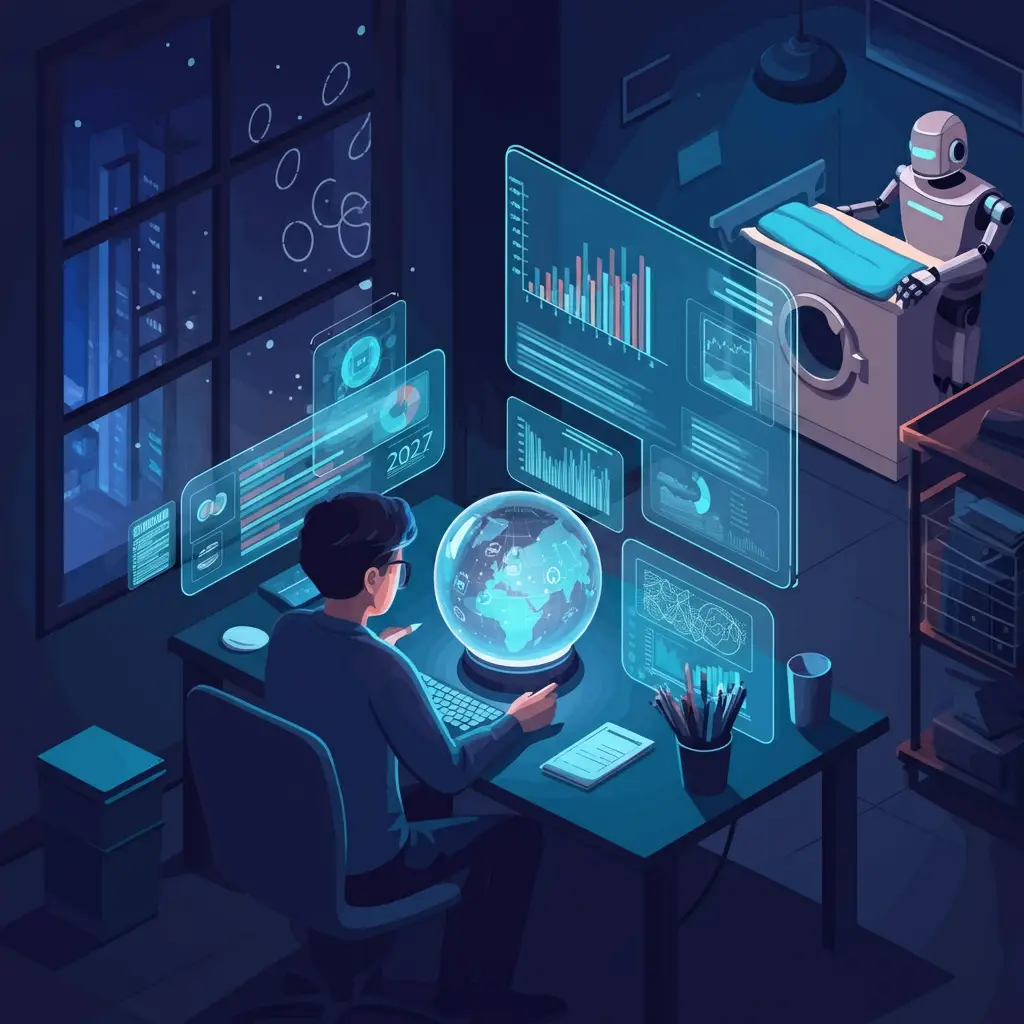
It’s 2 a.m., and I’m sitting here with a half-empty coffee mug and a screen full of trend graphs glowing back at me. At first, it all looked like noise. But after hours of squinting at the data, something clicked. That was the moment I realized that the most popular trends weren’t the most profitable ones. Popularity is what everyone chases. Profitability is what winners chase.
That late-night breakthrough didn’t just change the way I filter business opportunities. It changed the way I approach the future. And as technology continues reshaping industries faster than you can say “digital transformation,” one thing’s clear: the future belongs to those who anticipate it and prepare now.
If you’re reading this, you’re likely juggling trendy opportunities and trying to figure out which ones are worth your time. Here’s a look into how I’ve learned to decode trends, prepare for the future, and leverage AI (without feeling like I need a Ph.D. to do it).
Making Sense of Chaos with a Trend Scoring System
Ever feel like the business world throws so many buzzwords at you that your head spins? AI, Web3, quantum computing, voice tech… and that’s just Monday. It used to leave me frozen, unsure where to start.
That’s when I created a simple but powerful 5-Factor Trend Scoring System to cut through the noise and focus on real opportunities. Here’s how it works, step by step:
- Momentum (0–20): How fast is adoption growing? Is this trend actually picking up speed, or does it just look good on paper?
- Market Size (0–20): What’s the size of the potential audience? Trends with massive reach tend to be worth exploring, but make sure you can make a dent in the market.
- Competition (0–20): Is the space overcrowded? High competition can mean low margins. If everyone’s doing it, think carefully before you jump in.
- Timing (0–20): Are we in the “Golden Window”? Trends have a life cycle and being too early is just as bad as being too late.
- Fit (0–20): Does the opportunity align with your team’s strengths, resources, and goals? A great trend can fail if it’s not the right match.
Here’s how you act based on the score:
- 90–100: Go all in. Drop everything else, and pursue immediately.
- 70–89: High priority. Start planning your next steps.
- 50–69: Watch from the sidelines, but be ready to act quickly.
- Below 50: Ignore. You’re better off saving your time and energy.
Using this system, I eliminated 89% of distractions. It frees me up to chase the 11% of opportunities that actually make a difference.
Takeaway? If you’re not scoring opportunities, you might be wasting time on hype instead of what actually matters.
The Crystal Ball of 2027
It’s fun to imagine what businesses will dominate the market two years from now. Spoiler alert: it won’t be the ones with the flashiest ads or the most funding today.
The leaders of 2027 are building right now. They’re focused on creating capabilities that will shape tomorrow, while everyone else is busy optimizing for now. Based on my research, here are five trends these future titans are betting on:
- AI-Native Business Operations: This isn’t just about automated processes. It’s about businesses that are building operations with AI as their core, not as an afterthought. Think smarter workflows, faster decision-making, and continuous optimization.
- Voice-First Customer Interactions: Forget typing! From voice search to conversational AI, companies that simplify how people interact with their products are going to win big (looking at you, Alexa and Siri).
- Predictive Market Intelligence: Imagine knowing where your industry is headed before your competitors do. Future leaders are using predictive analytics to spot shifts before they happen.
- Automated Competitive Advantage: The most successful businesses will systematize innovation. They’ll use AI to stay miles ahead, not just reactively but strategically.
- Integrated Business Ecosystems: Collaboration will trump isolation. Companies that thrive will integrate their solutions with others, creating seamless ecosystems their customers can’t live without.
Take a moment to ask yourself: Which of these capabilities is your business building today? If the answer is none, it’s time to reevaluate your strategy.
Humor, AI, and Folding Laundry
Now, I’d be lying if I told you this future stuff didn’t feel overwhelming at times. There’s a lot to figure out. Every problem you solve reveals 10 more, and it’s easy to feel like you’re in a never-ending game of catch-up.
Take AI, for example. While businesses are revolutionizing industries with AI, here I am, still waiting for someone to invent an AI that folds laundry. (Look, I can dream, right?)
But here’s the thing about leveraging AI and technology in your business. You don’t have to master everything all at once. Start small. Solve real problems. Look for tools that integrate with your workflow instead of disrupting it.
Whether it’s analyzing trends at 2 a.m., scoring opportunities, predicting markets, or just trying to figure out the AI landscape, remember this one truth:
The future doesn’t belong to the biggest, the loudest, or the richest. It belongs to those who prepare for it today.
What’s Your Next Move?
Take a hard look at your goals for the next two years. Are you chasing trends, or are you strategically building for the future? Are you optimizing for today, or are you quietly preparing for long-term success alongside tomorrow’s market leaders?
Share your thoughts, breakthroughs, and plans below—I’d love to hear what you’re working toward.
And don’t forget, no matter how serious business planning gets, it’s okay to laugh along the way (especially if that coffee-fueled 2 a.m. breakthrough finally hits). Cheers to building bright tomorrows today!
#BusinessStrategy #TrendScoring #AIInnovation #FutureOfWork ****