Businesses currently navigating the evolving digital ecosystem face a new reality: AI-driven visibility is rewriting the rules. The traditional methods of building online visibility, rooted in SEO practices and cumulative rankings, are becoming less relevant as AI assistants like ChatGPT, Claude, and Gemini start to dominate how people discover and interact with businesses. This shift demands both a change in strategy and mindset.
The core insight is this: AI doesn’t remember you; it re-evaluates you. Visibility in the AI ecosystem isn’t a one-time win. It’s a dynamic, ongoing process that businesses must actively maintain to remain recommendable and discoverable. Here’s how businesses can adapt, build trust, and create a sustainable visibility system in this new landscape.
Visibility in AI Is Not Static
One of the most persistent misconceptions about AI visibility is the belief that once AI systems take notice of your business, you’re set. But unlike traditional search engines, which reward consistency in rankings over time, AI assistants re-evaluate entities every time someone launches a prompt. This creates a high bar for businesses to clear, not just once but over and over again.
Each AI interaction is a trust decision. It’s framed by questions like:
- Is this business still providing clear and structured information?
- Are its facts and messaging consistent across platforms and over time?
- Does this business remain a reliable recommendation within its industry?
If the answers to these questions falter, visibility doesn’t just stagnate; the momentum decays. AI quietly excludes unreliable businesses in favor of those it feels confident recommending.
The AI Visibility Flywheel
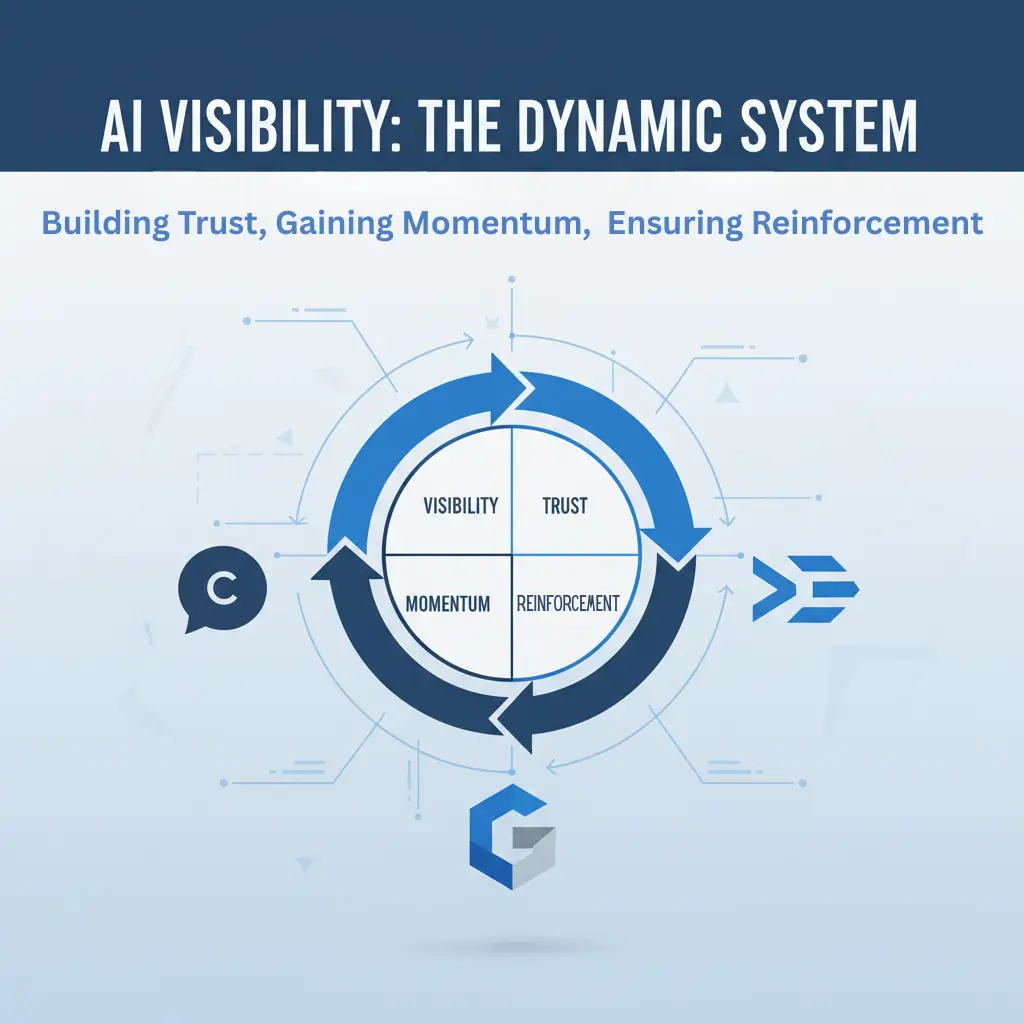
This ongoing re-evaluation process can best be illustrated by something we call the AI Visibility Flywheel. Imagine a cycle that looks like this:
Visibility → Trust → Momentum → Reinforcement → Visibility
- Visibility: AI systems notice your business because your content is clear, discoverable, and optimized for their algorithms.
- Trust: Consistent, accurate, and valuable content leads AI systems to trust your business.
- Momentum: Through repeated mentions and recommendations, your business builds a presence in AI-generated responses.
- Reinforcement: Regular, high-quality updates and strategic signals maintain this trust and strengthen the cycle.
- If any part of the flywheel weakens, it doesn’t just slow down. Momentum decays, and the AI system replaces you with a more reliable alternative.
Why the SEO Mindset Fails in the Age of AI
For years, SEO optimization has been the backbone of digital strategy. Businesses refined their websites with keywords, backlinks, and quality content to build cumulative rankings that could sustain visibility for months, even years. But this stability doesn’t apply to AI-driven systems, which operate on volatility rather than permanence.
Here’s a critical distinction:
- SEO assumes permanence. Rankings build over time and stay consistent unless significantly disrupted.
- AI assumes volatility. Every query represents a fresh evaluation, and visibility must be re-earned with each interaction.
This agile approach can feel intimidating, especially for businesses still relying on traditional digital strategies. But it’s not a threat. It’s an opportunity to build deeper, more sustainable relationships with AI systems and, by extension, the audiences they serve.
Building Systems for AI Visibility
If AI visibility isn’t about spiking traffic or achieving a specific ranking, how can businesses create a sustainable presence? The answer lies in designing systems that meet AI requirements consistently and dynamically. Here are actionable steps to help businesses thrive in the AI-driven future:
1. Prioritize Clarity Over Creativity
AI systems are built to understand and summarize information. They’re not wired to appreciate clever wordplay or abstract storytelling. This means your content must be structured, straightforward, and actionable. Focus on:
- Using simple, clear language.
- Organizing your content with headers, lists, and concise paragraphs.
- Answering audience questions directly and succinctly.
2. Ensure Consistency Across All Platforms
AI systems don’t just rely on one source to recommend a business. They evaluate data across websites, social media, and other digital platforms. To build trust, make sure:
- Your business information (e.g., address, contact details, services) is consistent everywhere.
- Your tone and messaging align across websites, posts, and other content.
- Any changes in your offerings or positioning are updated promptly across all channels.
3. Create Trust Signals AI Can Recognize
For AI systems, trust is derived from structured and reliable signals. These include metadata, schema markup, updated privacy policies, authoritative backlinks, and more. Review your digital touchpoints to ensure they:
- Use proper schemas to help AI categorize and understand your content.
- Reflect expertise, authority, and trustworthiness (E-A-T) through updated credentials or client testimonials.
- Are free from technical issues like broken links or outdated information.
4. Focus on Momentum, Not Short-Term Wins
The flywheel model underscores that momentum matters. Instead of focusing on temporary spikes in visibility, think long-term. This means:
- Regularly publishing high-value content that reinforces your expertise.
- Staying active on platforms where your audience engages, even if it’s not driving immediate ROI.
- Tracking key metrics like mentions and AI interactions, rather than impressions or pageviews.
5. Adapt to Feedback and Market Evolution
AI systems are constantly evolving, and so should your strategy. Algorithms change, preferences shift, and new competitors emerge. To remain resilient:
- Regularly test how AI mentions your business compared to competitors.
- Review trending queries and adjust your content to reflect new interests or concerns.
- Use AI tools to generate insights and stay ahead of the curve.
Continuous Validation as a Competitive Edge
The dynamic nature of AI visibility might seem daunting, but it also levels the playing field. Unlike SEO, where long-established sites often benefit most, AI systems reward businesses that continuously demonstrate clarity, consistency, and trust. This means:
- Small or new businesses can compete with larger players by appearing authoritative and reliable in real-time.
- Businesses that innovate and stay agile can better adapt to the volatile AI landscape.
AI visibility isn’t about chasing rankings or hacking algorithms. It’s about building systems that ensure you’re continually recommendable—even when the rules shift.
Final Thoughts
AI visibility is reshaping how businesses connect with their audiences. By understanding the dynamic nature of this new landscape and focusing on trust, clarity, and momentum, you can create a system that not only earns visibility but sustains it. The visibility flywheel teaches us that success isn’t about being seen once. It’s about being consistently chosen.
As AI assistants increasingly influence business discovery and recommendations, the question isn’t whether your brand is ready. It’s whether your systems are. Are they designed to adapt, evolve, and thrive in a world where every moment is a test of trust? If not, now is the time to start building.