When it comes to artificial intelligence (AI), visibility is the key to staying relevant. But visibility isn’t just about being noticed once; it’s about continually showing up, building trust, and, most importantly, maintaining momentum. AI visibility momentum is a concept rooted in consistency and reuse. It’s what determines whether your business remains visible within AI systems for the long term or fades into the background.
This blog explores how momentum in AI visibility is built, why it’s essential, and how you can avoid the common pitfalls that disrupt it. By the end, you’ll have actionable tips to ensure your efforts compound into lasting results.
What Is AI Visibility Momentum?
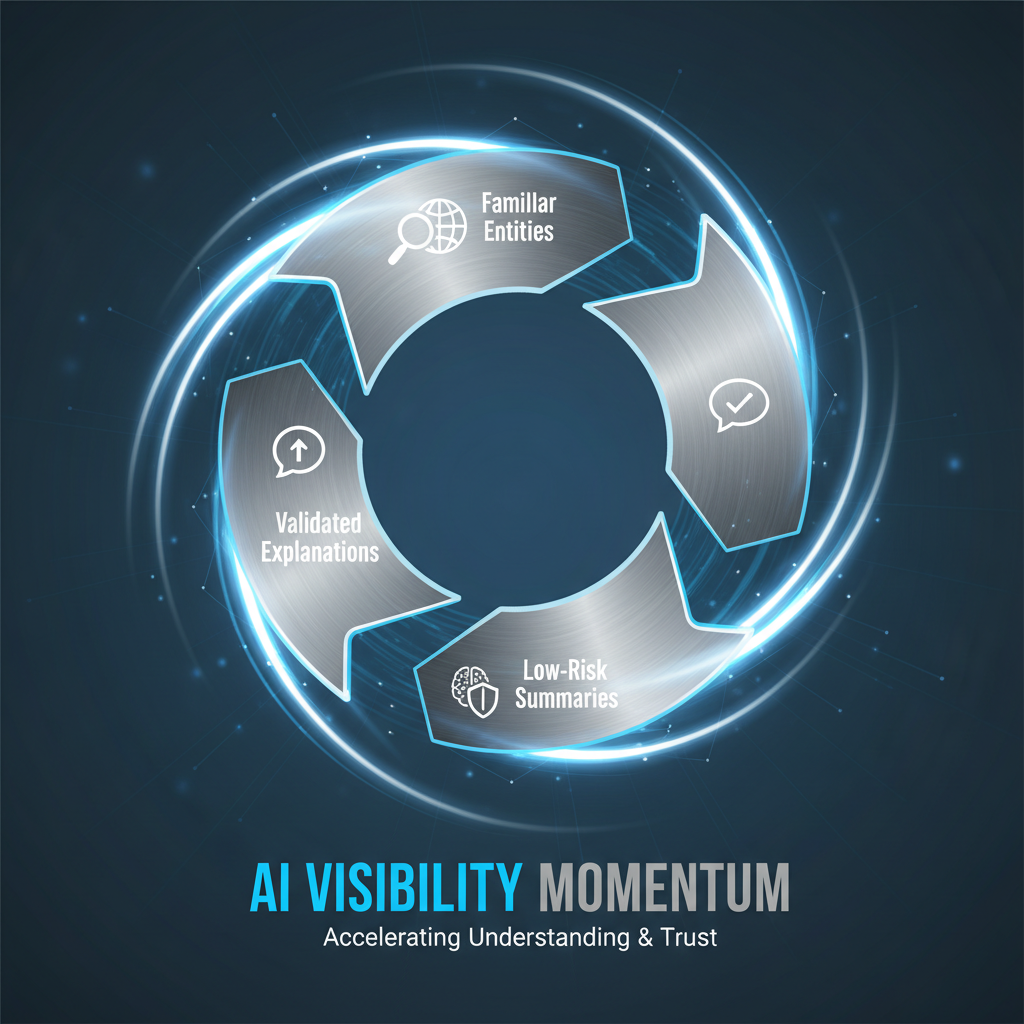
At its core, AI visibility momentum refers to the sustained presence and trustworthiness of your content or data within AI systems. Unlike traditional search engines, AI doesn’t operate purely on traffic, virality, or one-time hits. Instead, AI systems prioritize:
- Familiar entities that appear consistently over time.
- Validated explanations backed by credible sources or repeatable insights.
- Low-risk summaries that provide clear, reliable, and straightforward information.
When your digital presence satisfies these preferences repeatedly, AI systems recognize your brand as trustworthy and prioritize it in responses and recommendations. Over time, this recognition builds momentum.
But here’s the catch: momentum isn’t automatic. It’s deliberate and fragile. One wrong move, such as inconsistent messaging or outdated information, can derail your visibility and reset the trust you’ve worked hard to earn.
How AI Builds Momentum
AI doesn’t store trust like a memory bank. Each prompt or query evaluates data afresh, despite retaining patterns or preferences in a generalized manner. However, certain behaviors and strategies can trigger the flywheel effect, where momentum grows steadily with every iteration. Here’s how it works:
1. Reuse Amplifies Visibility
AI thrives on patterns, and consistency in your digital output reinforces those patterns. When you consistently share high-quality, validated, and reusable content, you signal to AI systems that you’re a reliable source.
For example:
- If your business frequently updates a blog on a niche topic, AI recognizes the reuse of clear and structured content as valuable.
- If your website’s product descriptions remain consistent and up-to-date across platforms, AI perceives you as a trusted entity.
Reuse works because AI systems value predictability over novelty. A familiar entity that provides dependable information every time is more valuable than a one-hit wonder.
2. Consistency Maintains Trust
The internet is rife with inconsistencies. Outdated hours on a Google business profile, conflicting product details across platforms, or differing tones in brand messaging can confuse both users and AI systems. Maintaining consistency across all touchpoints reinforces trust.
Think about these examples:
- A local coffee shop with the same opening hours listed on Google, its website, and its social media profiles is clear and reliable.
- A SaaS company that uses identical terminology to describe its features across blogs, FAQs, and product pages remains easy for AI to interpret.
3. Clean Structure Supports Scalability
AI systems excel at parsing structured data. Well-organized, scannable information is more likely to be reused in responses. This isn’t just about coding technical details; it’s about presenting your content in a way that AI can consistently understand.
Imagine a recipe blog:
- A detailed, clear recipe with ingredient lists in bullet points and step-by-step instructions will likely be featured in AI summaries.
- A rambling, unstructured post buried under anecdotal stories about last year’s holiday bake-off will likely be skipped.
Key takeaway: Clean organization doesn’t just help the human audience; it helps AI prioritize your data.
Common Mistakes That Disrupt AI Visibility Momentum
Despite the opportunities to build momentum, many businesses unintentionally sabotage themselves. Here are some common mistakes to avoid:
1. Breaking Consistency
Sudden changes in tone, messaging, or branding can disrupt AI’s perception of your business. For example, if your tagline subtly changes across platforms or you update website content without aligning it with social media, you’ve introduced inconsistency.
How to avoid this: Perform regular audits of all digital assets and ensure that information is cohesive across every channel.
2. Outdated or Missing Data
AI systems constantly validate your information against trusted sources. If your business’s listed hours, prices, or offerings are outdated in one place, you’re at risk of being deprioritized.
How to avoid this: Create a system for routinely updating contact details, product/service descriptions, and business information across directories like Google, Yelp, and LinkedIn.
3. Chasing Virality Over Reuse
Many businesses focus on creating viral content, hoping for a quick boost in traffic. While virality is exciting, it often lacks the structure and consistency required to build long-term momentum. AI systems value repeatability and reliability, not fleeting trends.
How to avoid this: Shift focus from viral campaigns to evergreen content that can be reused and repurposed over time.
4. Ignoring Structured Data Opportunities
If your website lacks schema markup, AI systems may struggle to interpret your content effectively. This can hurt your visibility in AI-driven summaries or result snippets.
How to avoid this: Implement schema markup to describe your content, such as business details, FAQs, or how-to steps.
Strategies for Building and Sustaining Momentum
Now that you understand how momentum is built and the risks that can disrupt it, here are actionable strategies to keep your visibility strong and growing:
1. Create and Maintain Systems
Consistency doesn’t happen by chance. It happens when systems are in place to ensure every piece of content aligns with your overall strategy.
- Use content calendars to plan updates across all platforms.
- Automate reminders for routine audits.
- Cross-check copy for uniformity before publishing.
2. Leverage Reusable Content
Evergreen content isn’t just good for SEO; it’s essential for AI momentum. Blogs, FAQs, and how-to articles that provide timeless value signal reuse and reliability to AI systems.
- Create pillar content that you can link to repeatedly.
- Repurpose content into different formats, like turning a blog into an infographic or a LinkedIn post.
3. Optimize for Structure and Clarity
AI systems prefer clean, clear, and scannable information. Here’s how to make your content AI-friendly:
- Use headings and subheadings.
- Add bullet points for lists.
- Write concise paragraphs (no more than three to four sentences each).
4. Focus on Continuous Improvement
Momentum compounds, meaning small improvements over time lead to significant long-term results. Conduct regular performance reviews of top-performing content and refine it further. Keep pace with AI trends to stay ahead in the game.
5. Invest in Trust Signals
AI validates your information through corroboration. The more trustworthy your data looks, the better:
- Collect reviews and testimonials.
- Collaborate with industry websites for quality backlinks.
- Display certifications, awards, and other credibility markers prominently.
The Bottom Line
AI visibility momentum isn’t about quick wins. It’s about steady, strategic growth through reuse, consistency, and clean structure. While this approach requires more upfront effort, it ensures your business can stay visible and relevant in the long run.
AI systems don’t trust blindly. They favor predictability, reliability, and familiarity. By avoiding common mistakes and focusing on sustainable strategies, you can ensure your flywheel of AI visibility keeps turning. Momentum doesn’t have to be fleeting, but it does require commitment.
How are you building and sustaining your momentum today? The time to take action is now.