Artificial intelligence is rapidly transforming how businesses and consumers interact with information. One of its key breakthroughs lies in how AI systems analyze and categorize products. Whether recommending the best laptop, identifying trending fashion items, or suggesting home appliances, AI evaluations have become a critical driver for product visibility and customer choice.
But what exactly happens behind the scenes? How do AI systems decide where a product fits, what it does, and who should see it? More importantly, how can businesses optimize their offerings to ensure they align with the AI’s decision-making process?
This blog explores how AI evaluates product categories, the factors it considers, and why mastering this process is essential for businesses looking to succeed in an AI-first world.
How AI Understands Product Categories
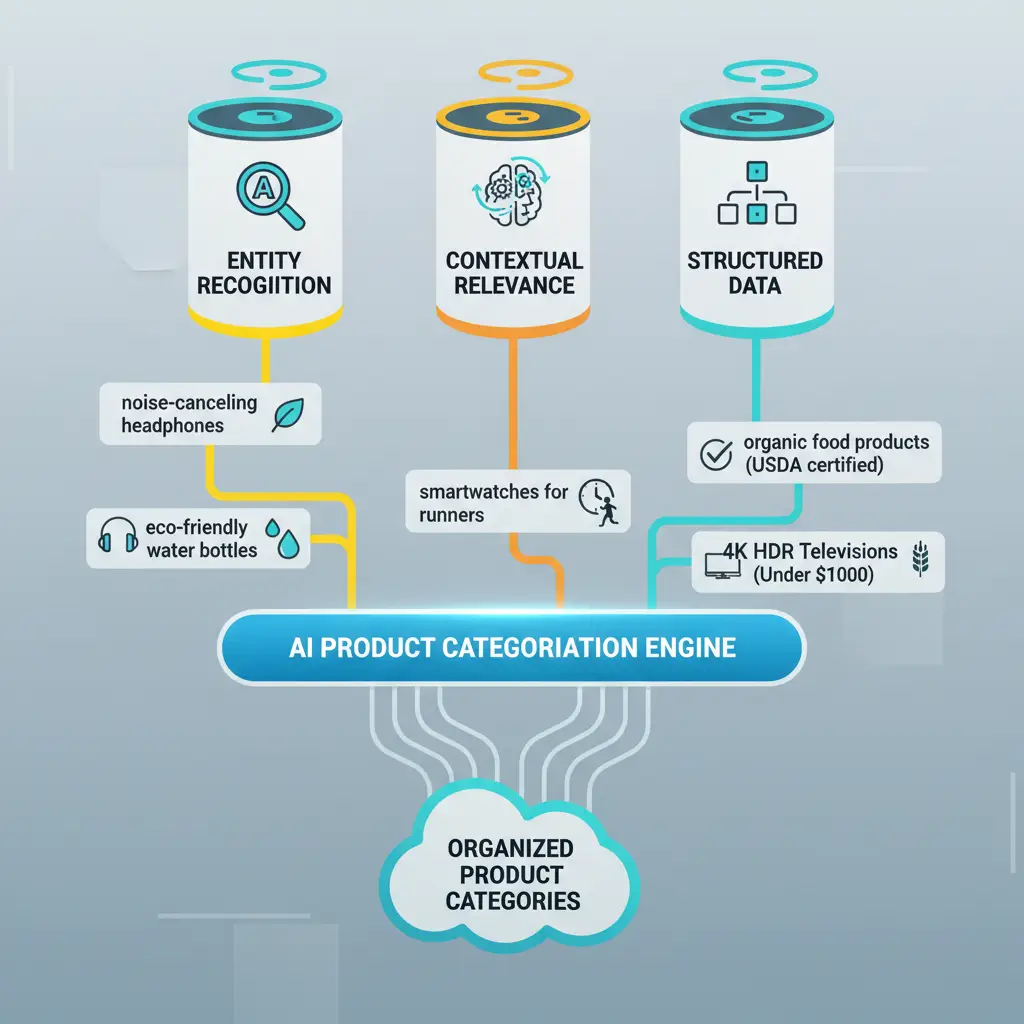
At its core, AI’s ability to define product categories hinges on three interconnected processes: entity recognition, contextual relevance, and structured data analysis.
1. Entity Recognition
Before AI can evaluate a product, it must first identify what it is. Entity recognition allows AI systems to pinpoint the key elements of a product and attach meaning to those elements.
For example, consider a query like, “Best noise-canceling headphones.” For AI to answer this effectively, it must recognize that “noise-canceling headphones” is an entity. It then matches this with identifiable products within that category, such as an over-ear model from Bose or an in-ear option from Sony.
What AI looks for:
- Brand names (e.g., “Sony”)
- Key product attributes (e.g., “noise-canceling,” “Bluetooth”)
- Relevant industry terms (e.g., “headphones,” “audio equipment”)
Example in Action:
A business selling eco-friendly water bottles might list attributes such as “BPA-free,” “stainless steel,” and “double-insulated.” If these aren’t consistently highlighted across their website, reviews, and product listings, AI systems may struggle to categorize the product correctly, reducing its chances of discovery.
2. Contextual Relevance
Context matters. AI systems analyze the context surrounding a product to determine not only what it is but also what it’s best used for and who would want it.
Imagine someone asking, “What’s the best smartwatch for runners?” AI doesn’t just look for smartwatches; it prioritizes those that align with running-specific needs like GPS tracking, water resistance, and durability.
How AI Determines Contextual Relevance:
- Target audience: e.g., “For runners,” “For gaming enthusiasts”
- Use cases: e.g., “Best for travel,” “Ideal for professional photographers”
- Complementary products: e.g., matching running shoes with energy gels or fitness trackers
Hypothetical Example:
A fitness-focused AI user asks, “What are the best supplements for improving recovery time after workouts?” Brands that clearly state their products’ benefits (e.g., “Supports muscle recovery in athletes”) are far more likely to feature in the AI’s recommendations than vague or generic descriptions like “High-quality health supplements.”
3. Structured Data
AI relies heavily on structured data to identify and categorize products. Structured data is essentially organized, machine-readable information that clarifies what a product is, what it does, and how it’s positioned in its category.
Examples of Structured Data:
- Schema markup: Codes added to websites to clarify specific details about a product.
- Attributes and metadata: Things like product dimensions, features, and price points.
- Organized catalogs: Easily accessible product pages with clear descriptions and images.
Why It Matters:
A beautifully designed website with zero structured data limits AI’s ability to properly evaluate its products. For example, imagine searching for “ergonomic chairs under $200,” only to have AI skip over your catalog because your prices or features aren’t encoded in machine-readable formats like schema.org markup.
Use Case:
E-commerce giant Amazon is a prime example of structured data in action. Each product page is rich with details like dimensions, customer reviews, and feature comparisons. This consistency ensures Amazon products dominate AI-driven product searches.
The Pitfalls of Misalignment
Unfortunately, many businesses inadvertently make themselves invisible to AI systems by failing to provide the clarity and structure these systems require. Here are a few common missteps that lead to visibility issues in AI evaluations of product categories:
1. Unclear Positioning
Products with vague or overlapping categories confuse AI systems. For instance, if your product is described as both a “portable air purifier” and a “personal fan,” AI might struggle to categorize it accurately, potentially omitting it from both searches.
2. Outdated Information
AI evaluates current and reliable data. If your products lack up-to-date descriptions or price points, they may lose relevance, especially for AI systems prioritizing real-time search queries.
3. Lack of Supporting Content
Brands that invest in blogs, reviews, and how-to guides create a web of signals reinforcing their authority in a product category. Without supporting content, your brand may be overlooked, even if the product itself is excellent.
Optimizing for AI Visibility
Getting your products noticed by AI systems takes more than good design or competitive pricing. It requires aligning your brand with the way AI evaluates and organizes the marketplace.
Here’s how to optimize your offerings for AI-driven discovery:
1. Focus on Entity Clarity
Ensure your brand and products are clearly defined across every platform. Use consistent names, categories, and descriptions to avoid mixed messaging.
Quick Tip: Don’t just list features; explain what makes your product unique in its category.
2. Use Structured Data
Take advantage of schema markup to provide machine-readable details about your products. This improves the likelihood they’ll be included in AI-generated answers.
Pro Tip: Use schema generators or hire an expert to align your website with modern standards.
3. Create Relevant, Engaging Content
Produce blogs, FAQs, or videos that connect your products to specific use cases or audiences. AI rewards businesses that consistently reinforce their relevance.
Example: A mattress company might publish content like, “How to Choose the Best Mattress for Side Sleepers,” increasing visibility for niche queries.
4. Monitor and Adapt
Stay updated on how AI systems shape user behavior. Analyze which keywords or categories are gaining traction and adjust your approach in real time.
Solution Alert: Using tools like Axis Suite can help businesses identify gaps in AI visibility and pinpoint opportunities for growth.
The Bigger Picture
AI’s ability to analyze and evaluate product categories is reshaping the way consumers make buying decisions. From understanding entities to prioritizing contextual relevance and structured data, the process is rigorous and impartial, rewarding businesses that align with AI’s criteria.
If you want to stay competitive, now’s the time to rethink your approach to product categorization and visibility. Your ability to show up in AI-driven recommendations isn’t just about being present; it’s about being optimized for discovery.
Want to analyze trends like this in your own business?
→ Explore Axis Suite