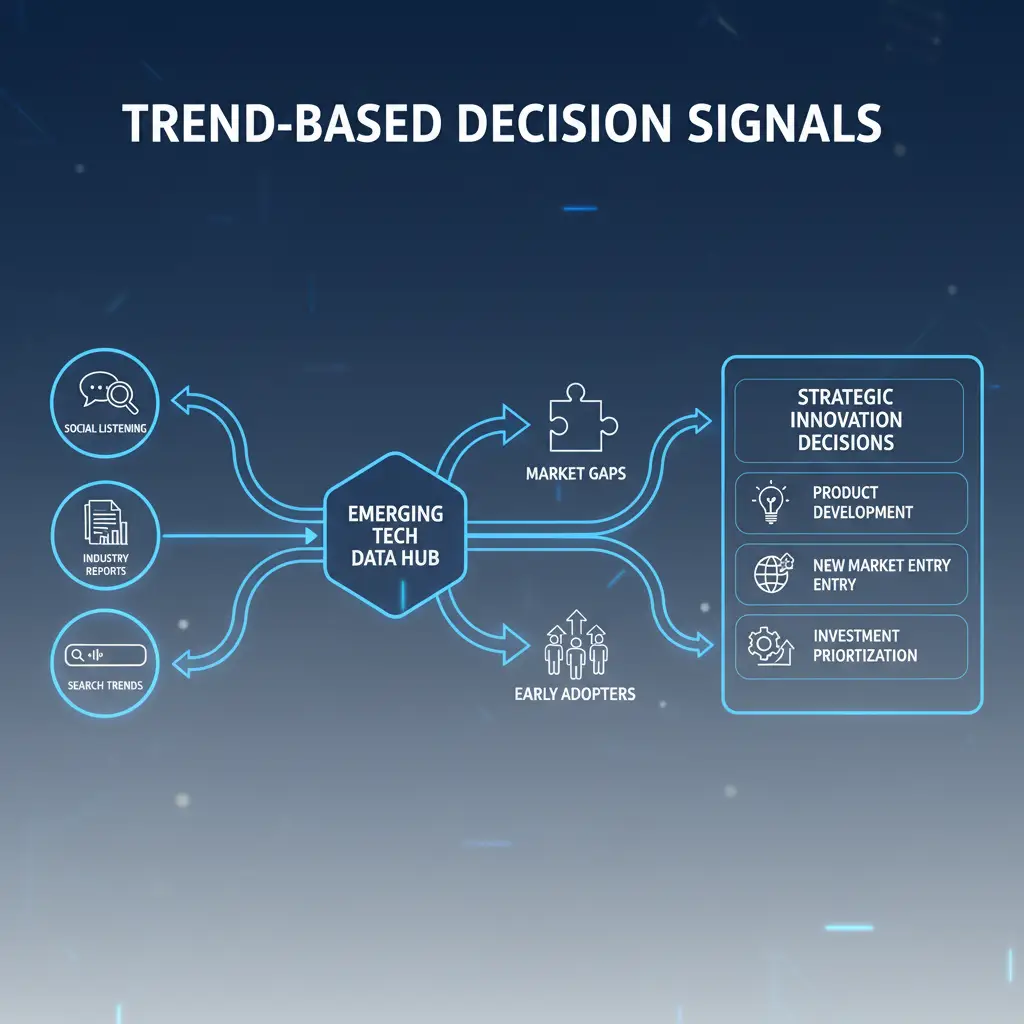
The world of technology is evolving at breakneck speed. Each year, groundbreaking innovations reshape industries and create new opportunities for businesses willing to adapt. But in this fast-paced environment, how do businesses identify which trends will gain traction versus those that will fade away? The answer lies in trend-based decision signals.
These signals are tools businesses can use to make informed decisions, using data derived from emerging patterns to outperform competitors and future-proof their strategies. This blog explores what trend-based decision signals are, why they matter, and how businesses can leverage them to stay ahead in an unpredictable tech landscape.
What Are Trend-based Decision Signals?
At their core, trend-based decision signals are insights derived from current and emerging patterns in the market. They can be influenced by consumer behavior, technological advancements, or shifting macroeconomic factors. Instead of guessing which innovation might succeed, businesses can use these signals to guide their strategies, ensuring they invest in efforts that align with future demands.
Key Characteristics of Trend-based Decision Signals
- Dynamic in Nature
Trends are not static; they evolve over time. Decision signals help track these changes in real-time, ensuring businesses can respond proactively rather than reactively. - Data-Driven
These signals are rooted in quantitative and qualitative data, minimizing reliance on intuition and prioritizing evidence-based strategies. - Predictive
By analyzing trends at an early stage, these signals can forecast potential success, adoption rates, or challenges for an emerging technology.
The Importance of Identifying Emerging Trends
Staying ahead of tech trends isn’t just a competitive advantage; it’s critical for survival. Companies that fail to adapt risk being outpaced by those who are better attuned to market changes.
Why Trend Identification Matters
- First-Mover Advantage
Identifying trends early allows businesses to capitalize on opportunities before competitors. Look at pioneers in the electric vehicle industry, cryptocurrency, or renewable energy; early adopters established themselves as leaders while others played catch-up. - Resource Optimization
Focusing on the right trends helps businesses allocate resources efficiently. Investing time, money, and talent into dead-end innovations can be a costly mistake. For example, companies that focused on blockchain’s utility in logistics and supply chains have seen more success than those chasing unsustainable uses of the technology. - Mitigation of Risks
Monitoring trends allows businesses to anticipate potential disruptions and pivot quickly. For instance, companies aware of the rise in remote work trends pre-pandemic were far more prepared to cater to an online-first workspace.
How to Identify Trend-based Decision Signals
Go beyond surface-level observations by incorporating a structured approach to trend identification.
1. Leverage Data Sources
Trends often emerge through patterns hidden across diverse data sets. Businesses must monitor and analyze these sources for early indicators of change.
Examples of Data Sources:
- Social Listening Platforms
Consumer chatter on platforms like Twitter or Reddit often hints at innovations gaining traction before they hit mainstream news. - Industry Reports and Case Studies
Resources from firms like Gartner or McKinsey provide big-picture insights into trends impacting specific sectors. - Google Trends or Search Behavior
Significant spikes in search activity for specific keywords often signal growing public interest in a product or technology.
2. Spot Market Gaps
Emerging tech trends often address unfulfilled needs or inefficiencies. Observing pain points within industries can help businesses predict which innovations will take off.
Case Study:
The rise of fintech startups addressing gaps in traditional banking services illustrates how market inefficiencies create fertile ground for innovation. Companies like Stripe and Robinhood identified underserved audiences and built scalable solutions tailored to their needs.
3. Monitor Early Adopters
Watching early adopter communities provides valuable insight into technological viability. Tech-savvy users often set the tone for broader market uptake.
Example:
When wearable fitness trackers first launched, fitness professionals and enthusiasts were among the earliest adopters, validating the technology’s utility and hinting at its mass-market potential.
Analyzing Trend Impact
Once trends are identified, businesses need to evaluate their potential impact. Not every emerging technology will significantly shift the market. Sorting hype from reality requires critical analysis.
Key Factors to Evaluate
- Scalability
Can the technology meet mass-market demands? Examine whether it’s practical, accessible, and affordable in the long term.
Example:
AI-powered chatbots have grown substantially in scalability due to advancements in natural language processing and decreasing costs for AI infrastructure.
- Ecosystem Readiness
Does the market have the infrastructure and conditions needed to support the trend? 5G adoption, for example, unlocked possibilities for IoT devices and autonomous vehicles, but it would’ve struggled without supporting network infrastructure. - Adjacent Markets
Consider how an emerging trend might influence or disrupt industries outside its core niche. The rise of blockchain has catalyzed innovation not only in cryptocurrency but also in sectors like logistics, gaming, and real estate. - Regulation and Compliance
Anticipate how regulations might accelerate or slow adoption. Sustainable packaging gained traction largely due to government mandates around environmental responsibility.
Leveraging Data-Driven Insights
Data is the foundation of effective trend-based decision-making. Businesses that harness analytics and combine it with human creativity can make smarter, forward-thinking choices.
Steps to Leverage Trend-based Insights
- Adopt Predictive Modeling
AI tools can analyze historical data to forecast future changes. Machine learning models, for instance, can predict how consumer preferences will evolve in real time. - Use Sentiment Analysis
Understand not just what trends are emerging but also how people feel about them. Positive sentiment associated with early adopters often translates to higher adoption rates. - Create Feedback Loops
Often, trends emerge faster than anticipated. Use internal and external data sources continually to refine your strategies.
Is Your Business Trend-Ready?
Identifying and analyzing trends is no longer optional. It’s an essential competency for businesses to thrive in an era where technology evolves overnight and waiting means falling behind. Leveraging trend-based decision signals ensures your business remains agile, competitive, and innovates in the right direction.
Want to analyze trends like this in your own business?
→ Explore Axis Suite