Vendor announcements are usually read for what they say, and less often for when each part applies. That gap produces a common kind of error: a statement that was accurate about the announcement and inaccurate about the calendar. Microsoft’s October 30 announcement of separate preferences for AI training and AI grounding is a clear example, because it carries several dates and each one means something different. Reading them carefully takes ten minutes and prevents sentences that are wrong on the day they are said.
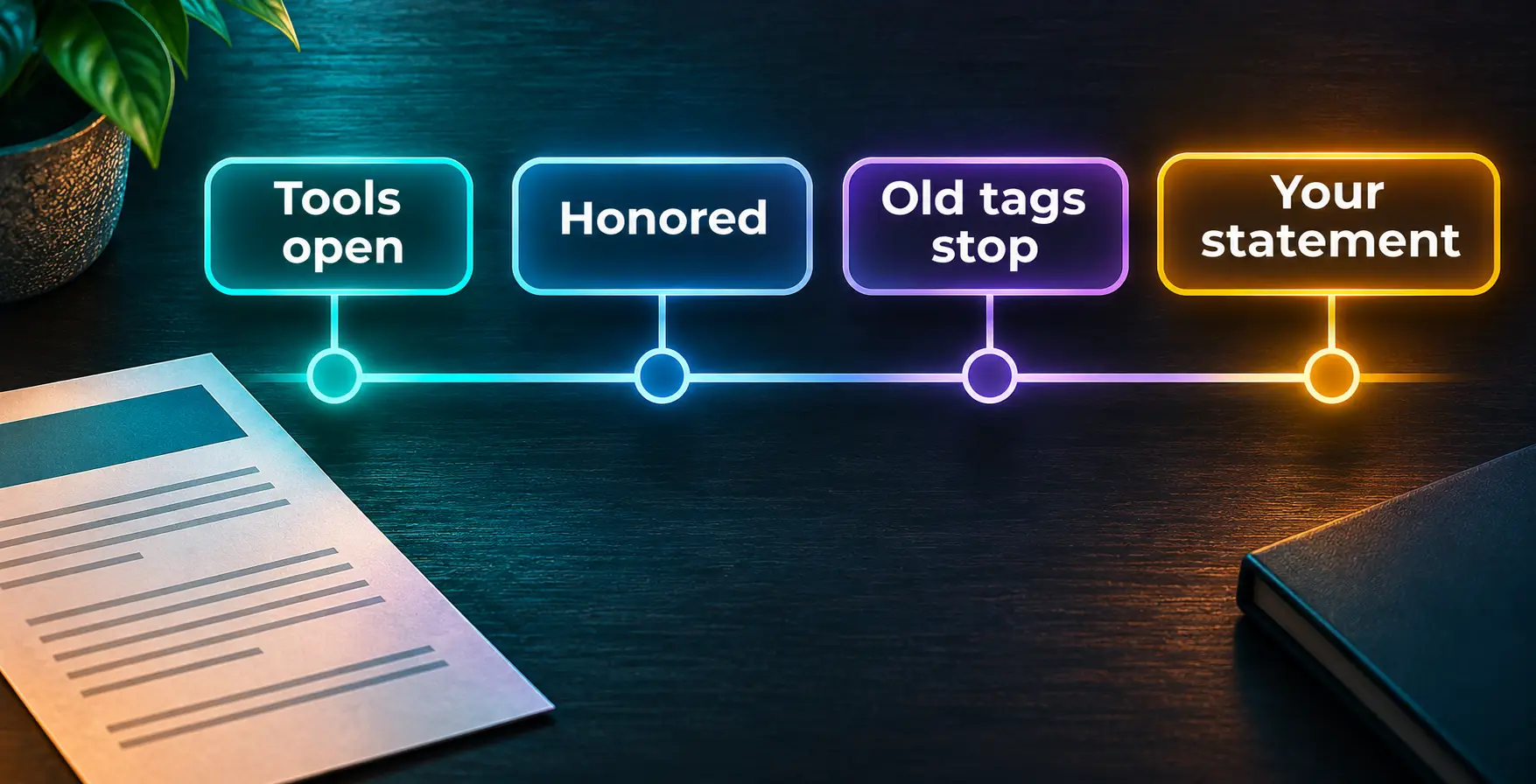
The dates, as Microsoft gives them, are these:
October 30, 2026: the announcement.
December 15, 2026: Microsoft says tools for moving off the older NoArchive and NoCache tags open on this date, for sites that use those tags as of that date.
February 1, 2027: Microsoft says it will honor the new preferences as it crawls.
March 1, 2027: the deadline for completing the transition steps, after which Microsoft says the older tags will no longer be read as a preference for training or grounding.
Microsoft also describes temporary grounding preferences within that transition, which last until a page is recrawled or September 30, 2027, whichever comes first. The transition section is detailed enough that a summary, including this one, can miss a point. A site it applies to should read it directly.
Each date answers a different question. The first says that a policy has been announced. The second says when a site can begin acting on one part of it. The third says when the vendor begins applying the new preferences. The fourth says when an older method stops counting. Treating any one as “the date this took effect” collapses distinctions the announcement keeps apart.
The February 1 date deserves the closest reading. Microsoft says it will honor the preferences “as it crawls.” That is a start, not a switch. Whether a particular page is covered depends on when Microsoft crawls that page, and Microsoft says that a signal such as IndexNow can increase the chance of a recrawl but does not guarantee a recrawl date. The announcement also says that publishing a setting is not the same as activating it. Put together, those statements describe three different points in time for any one page: when the policy was announced, when it began to be honored, and when it is applied to that page. A statement about a preference should say which of the three it means.
The dates also create different jobs for different people. The practical reading depends on who is asking:
Whoever owns the site’s technical setup: the December 15 and March 1 dates matter most if the site uses the older tags, because they mark a window for the transition steps.
Leadership: February 1, 2027 matters most, because it is when the vendor says it starts honoring the new preferences. Before then, the announcement describes a future policy.
Marketing and brand: any assessment of what the new preferences changed belongs after February 1 and after the relevant pages have been recrawled, not before.
A short dated reading note keeps all of this straight. It needs five fields: the page title and link, the day you read it, the dates it gave, anything you were unsure of, and who read it. When someone later repeats the policy in a meeting, the note is what their sentence gets checked against. A status line written from the note might read, before February 1: “Microsoft has announced separate preferences and says it will honor them starting February 1, 2027. We have decided our position for each use and have not yet published.” After February 1, the same line would say whether the site has published, and that Microsoft says it honors preferences as it crawls.
Three slips are easy to predict. One is saying that Microsoft already honors the new preferences, when it says it will begin on February 1, 2027. Another is saying that a preference removes a site from search, when Microsoft says the preferences do not change eligibility for traditional Bing search results. A third is saying that a Microsoft date applies to every AI assistant, when the announcement concerns Microsoft’s products and says nothing about ChatGPT, Claude, Gemini, or Perplexity. These are small errors, but they travel. A sentence repeated in a leadership update becomes the company’s understanding, and correcting it later costs more than a dated note costs now.
The calendar also leaves a useful period before February 1. It is time to decide what the site wants for each use, which does not depend on any date, and to put the review date on the same calendar as Microsoft’s so everyone sees the sequence. Microsoft can revise its plans, and a note that says “as read on this date” stays accurate even after the policy changes.
FAQ
When does Microsoft say it will start honoring the new preferences? Microsoft says it will honor them as it crawls, starting February 1, 2027. Until then, this is an announced future policy.
Does the February 1 date mean every page is covered that day? Not necessarily. Because Microsoft says it honors preferences as it crawls, a given page is covered depending on when Microsoft crawls it. The announcement does not promise a recrawl date.
What happens to the older NoArchive and NoCache tags? Microsoft says that after March 1, 2027, those tags will no longer be read as a preference for training or grounding. It describes transition steps for sites that use them, so affected sites should read the announcement.
Is publishing a preference the same as having it applied? No. Microsoft says publishing a setting is not the same as activating it. A statement about a preference should say whether it has been published, what Microsoft says it does with it, and whether anything has been observed.
Does a Microsoft date tell me anything about ChatGPT, Claude, Gemini, or Perplexity? No. The announcement concerns Microsoft’s products and services, and each of the other engines has its own documentation and controls.
Is this article reporting a result from Axis Suite? No. It reads the dates in a vendor announcement and reports no result for any brand.
About Axis Suite Axis Suite is the independent intelligence layer that tracks what AI says about your brand and the observable evidence behind it, retrieval, narrative, recommendation, and corroboration signals, across engines including ChatGPT, Claude, Gemini, and Perplexity. Built by TrendAxis, Axis Suite works from a framework that separates Mentioned, Cited, Recommended, and Chosen. Axis Suite is measurement infrastructure, not a marketing quick fix. Explore the Proof Center.