There is a distinction forming in AI visibility that most teams have not recognized yet.
Marketing and engineering are both essential. But they produce fundamentally different things for AI recommendation. Understanding the difference changes how brands compete for visibility across ChatGPT, Claude, Gemini, and Perplexity.
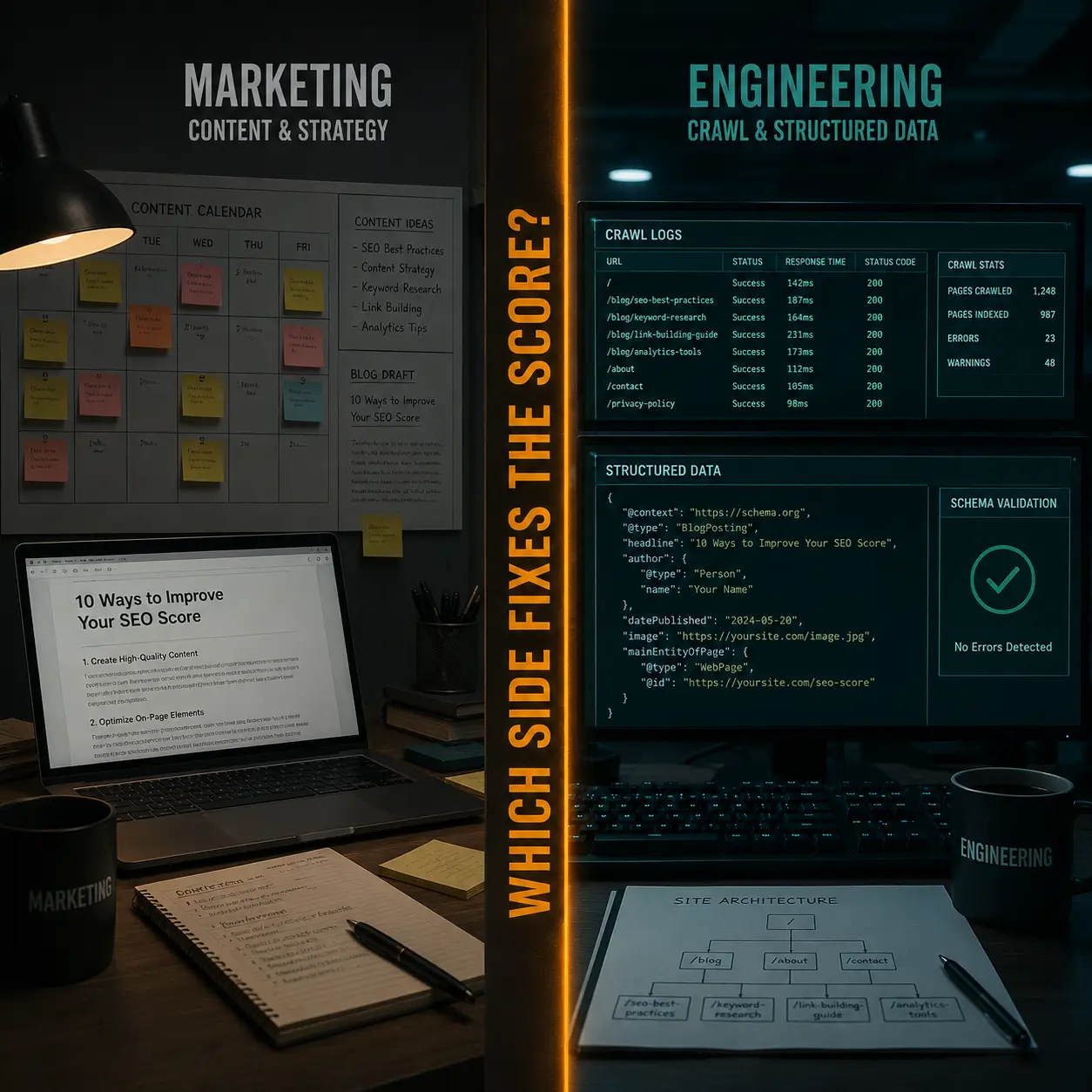
Marketing creates claims. Engineering creates evidence. AI believes evidence.
What Counts as a Claim
A claim is anything your brand says about itself through channels it controls.
Your homepage headline that says “The Leading Platform for Enterprise Teams” is a claim. Your blog post explaining your methodology is a claim. Your whitepaper describing market trends through your lens is a claim. Your social media post about your latest feature release is a claim.
Claims are not bad. They are necessary. They define your positioning, articulate your value proposition, and communicate your differentiation. Without claims, AI has nothing to evaluate.
But claims alone do not produce confident AI recommendations from ChatGPT, Claude, Gemini, or Perplexity. Because a claim from your own website is one source making one assertion. AI treats it as input, not proof.
What Counts as Evidence
Evidence is anything that corroborates your claims from sources you do not control.
A G2 review from a customer who independently describes your platform using the same language as your positioning is evidence. An analyst report that names you as a top provider in your category is evidence. A comparison article that includes you alongside the leading alternatives in your space is evidence. A customer testimonial that appears on a third-party publication is evidence.
Each piece of evidence comes from an independent source. AI treats independent corroboration differently than self-published claims. Multiple independent sources saying the same thing about your brand creates a belief. A belief is what AI recommends from.
The Engineering Side of Evidence
Here is where most teams miss the connection.
Evidence does not appear by accident. It requires engineering.
Crawlable pages ensure AI can access your information. If AI cannot reach your website, it has no starting point for evaluating your claims. Crawlability is an engineering decision that determines whether AI ever encounters your content.
Structured data ensures AI can interpret your information programmatically. When your pages include proper schema markup, AI systems can extract and classify your capabilities more accurately. Structured data is an engineering implementation that improves how AI understands your claims.
Consistent category language across your website, directory listings, and third-party profiles ensures AI classifies you correctly. If your website says “recommendation intelligence” but your G2 listing says “SEO tool” and your Crunchbase profile says “marketing analytics,” AI sees conflicting evidence about your category. Consistency is a coordination problem between marketing and engineering.
Public documentation provides depth evidence. API references, integration guides, and technical resources signal capability depth to AI systems. Documentation is typically an engineering deliverable that marketing teams rarely consider as an AI visibility asset.
Each of these engineering elements creates conditions for evidence to reach AI. Without them, your marketing claims exist but AI cannot verify them.
Why the Distinction Changes Strategy
When teams understand the difference between claims and evidence, their AI visibility strategy changes.
Instead of responding to low visibility by publishing more blog posts, they check whether AI can access their existing content. Instead of creating more landing pages, they audit whether their category language is consistent across all sources AI draws from. Instead of launching social campaigns, they invest in G2 review generation or analyst outreach that creates independent corroboration.
The shift is from volume to verification. From publishing more to ensuring what exists can be found, evaluated, and corroborated.
This does not mean stopping content production. It means recognizing that content production addresses one half of the equation. The engineering half determines whether that content ever reaches AI and whether independent sources validate what it says.
The Collaboration Model
The most effective AI visibility programs bring marketing and engineering together around a shared diagnostic process.
Marketing defines the positioning and category. This is the claim layer. What do we want AI to believe about us?
Engineering ensures accessibility and structure. This is the evidence layer. Can AI find our information, interpret it correctly, and cross-reference it against independent sources?
Together they create a feedback loop. Marketing creates claims. Engineering makes them verifiable. Monitoring reveals whether AI believes them. Diagnosis identifies which layer needs improvement. Both teams work on the fix.
That collaboration model is how brands build AI recommendation confidence systematically across ChatGPT, Claude, Gemini, and Perplexity rather than hoping content volume eventually moves the needle.
Frequently Asked Questions
What is the difference between a marketing claim and engineering evidence?
A marketing claim is what your brand says about itself through channels you control. Engineering evidence is what independent sources say about you that AI can verify. AI systems like ChatGPT and Perplexity weight independent evidence more heavily than self-published claims.
Why does AI trust evidence over claims?
AI is designed to evaluate trustworthiness. A claim from one source is an assertion. The same claim corroborated by multiple independent sources becomes a belief. AI recommends based on beliefs, not assertions.
What engineering factors affect AI visibility?
Crawlability, structured data, rendering requirements, category language consistency across sources, and public documentation all affect whether AI can access, interpret, and verify your brand information. These are engineering decisions, not content decisions.
How should marketing and engineering collaborate on AI visibility?
Marketing defines the positioning and creates the claims. Engineering ensures AI can access the content, interpret it correctly, and find corroborating evidence from independent sources. Both teams should share a diagnostic process that identifies which layer needs improvement.
Does content still matter for AI visibility?
Yes. Content defines your positioning and gives AI something to evaluate. But content alone produces claims without corroboration. The strongest AI visibility combines marketing content with engineering accessibility and independent evidence.
What is the fastest way to create evidence for AI?
The fastest evidence investments are typically G2 review campaigns, analyst outreach, and comparison article inclusion. Each creates independent corroboration that AI weights more heavily than additional self-published content.