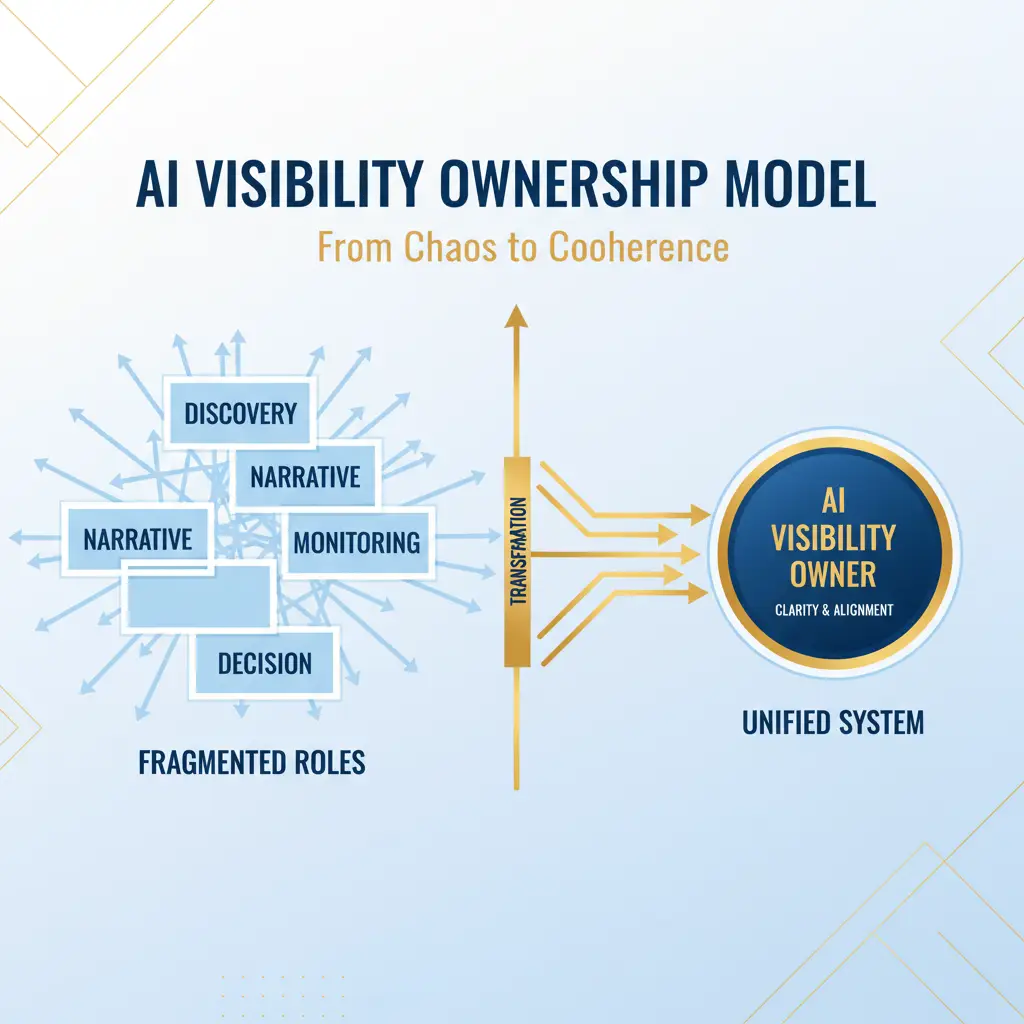
AI visibility is critical for modern businesses. It dictates how search engines, AI tools, and other platforms perceive and promote your brand. Achieving and maintaining AI visibility can feel like solving a complex puzzle, especially when responsibility for it is scattered across multiple roles.
Fragmented ownership of AI visibility often leads to miscommunications, inefficiencies, and missed opportunities. But there’s good news–streamlining ownership into a unified system isn’t just achievable; it’s transformative.
This post will explore the pitfalls of fragmented AI visibility roles, the benefits of consolidating ownership, and actionable steps to implement a streamlined system. By the end, you’ll have a clear roadmap to align your AI strategy for better visibility and trust.
The Problem with Fragmented AI Visibility Ownership
Many businesses unknowingly divide AI visibility tasks among various roles. While this might sound like a collaborative approach, it often creates unnecessary complexities.
Here’s a typical breakdown of fragmented AI visibility roles:
1. Discovery Owner
This person monitors how AI platforms (like search engines or AI assistants) discover the business. Their job is to identify which keywords, phrases, or datasets AI associates with the brand.
2. Narrative Owner
This individual manages messaging consistency across platforms. They ensure that descriptions, brand voice, and tone are aligned–from the website to social media.
3. Monitoring Owner
This role tracks changes in AI-driven visibility, such as shifts in search engine rankings. They analyze metrics to determine what’s working and what’s not.
4. Decision Owner
Finally, someone approves updates or changes to messaging and strategies, often based on input from the other three roles.
On the surface, this division seems logical. But when responsibilities are split this way, gaps inevitably emerge.
Common Issues Created by Fragmented Roles
- Communication Gaps: Discovery Owner identifies visibility problems, but Narrative Owner isn’t involved in finding solutions.
- Lost Oversight: Monitoring Owner notices a drop in search rankings, but Decision Owner doesn’t act on it quickly enough.
- Redundant Efforts: Multiple roles work on overlapping tasks like updating messaging but fail to coordinate, leading to inconsistency.
- Missed Opportunities: AI systems reward clarity and alignment. If responsibilities are unclear, those algorithms may hesitate to promote your business.
The outcome? Scattered efforts, slower decision-making, and ultimately, weaker AI visibility.
The Solution: Unified Ownership
AI thrives on clarity. Instead of spreading tasks across multiple roles, businesses should consolidate responsibilities into a streamlined system. This doesn’t mean eliminating collaboration; it’s about assigning clear ownership for key tasks while supporting contributions from others.
Benefits of a Streamlined System
When ownership of AI visibility is clear and unified, businesses gain significant advantages:
- Improved Efficiency: Fewer handoffs mean faster decision-making.
- Aligned Messaging: Unified roles ensure consistent language and tone across all channels, boosting credibility with AI and customers alike.
- Proactive Monitoring: With one person tracking AI-driven visibility, issues are identified and addressed more quickly.
- Greater Trust: Clear messaging builds customer trust, while AI systems reward consistency with higher visibility.
How to Transition to a Unified AI Visibility Model
Shifting from fragmented ownership to a unified system doesn’t have to be complicated. Here’s a step-by-step guide:
1. Define the Role of AI Visibility Owner
Identify a single person who will take ownership of AI visibility. Their responsibilities should include tasks like:
- Asking AI tools (e.g., search engines) questions about how the business is currently described.
- Validating messaging consistency across platforms.
- Prioritizing necessary updates to align with brand goals.
2. Centralize Responsibilities
While the AI Visibility Owner will lead the effort, they don’t need to do everything alone. Create a clear structure where other team members provide support:
- The Marketing Team ensures that messaging frameworks are up-to-date and aligned.
- The Data Team provides reports on visibility trends.
- The Leadership Team approves significant strategic shifts when needed.
This centralized approach offers the best of both worlds–clear ownership and collaborative input.
3. Establish Consistent Audits
Schedule regular audits to evaluate your AI visibility. The AI Visibility Owner should:
- Use specific tools (like search engine analytics or reputation management software) to gather insights on visibility.
- Identify patterns between visibility changes and updates to messaging or keywords.
- Share findings with relevant teams to maintain alignment.
Example tools include Google Analytics, Ahrefs, or AI-specific monitoring platforms.
4. Create an AI Messaging Playbook
To streamline consistency, develop a playbook that includes:
- Approved keywords and phrases for your brand.
- Messaging templates for different platforms.
- Tone and language guidelines.
This ensures that anyone contributing to AI visibility has a clear framework to follow.
5. Track Metrics That Matter
Set clear KPIs (key performance indicators) to monitor improvements. Examples include:
- Search engine rankings for specific keywords.
- AI-driven recommendations for your business.
- Engagement metrics, like clicks or conversions tied to visibility efforts.
Tracking the right metrics will help you validate that your unified approach is working.
6. Focus on Long-Term Stability
AI systems evolve constantly, but they reward businesses with stable, consistent narratives. Resist the urge to change messaging frequently. Instead, prioritize incremental improvements based on data.
Putting It All Together
AI visibility can no longer be an afterthought. It plays a crucial role in how customers find and trust your business online. By consolidating fragmented roles into a streamlined system with clear ownership, businesses can eliminate gaps, strengthen their messaging, and boost overall visibility.
Remember, it’s not about excluding contributions–it’s about creating a system where workflows are clear and responsibilities are steady.
Key Takeaway
AI rewards consistency over consensus. By simplifying ownership and maintaining alignment, your business can achieve visibility that not only lasts but also compounds over time.
If you’re ready to take control of your AI visibility, ask yourself this question: Who should be your AI Visibility Owner? The answer could change everything.