Most businesses think AI visibility is one problem.
Either AI recommends your brand, or it does not.
That sounds simple. But it hides a deeper truth: brands can fail in AI discovery for very different reasons. If you treat those reasons as the same issue, you will waste time, budget, and effort fixing the wrong thing.
That matters now because AI systems do more than list names. They retrieve, classify, compare, summarize, and recommend. A brand can be easy for AI to find but hard for AI to understand. It can also be well understood in category terms but still too weakly represented to appear often enough. Those are not small differences. They point to different root causes and require different solutions.
This is where many teams get stuck. They see the same surface symptom: we are not getting recommended enough. Then they assume the answer is always more content, more mentions, more citations, and more visibility work.
Sometimes that is true.
Often, it is not.
There are two different AI visibility problems that matter most:
- Low persistence: AI does not retrieve your brand often enough.
- Low category discovery: AI retrieves your brand, but places it in the wrong category or compares it against the wrong competitors.
The symptom may look the same. The root cause is not. And the fix is definitely not.
In this post, we will break down both problems, explain why the distinction matters, and show how Axis Suite helps brands identify whether they need more signal strength or better category precision.
Why AI visibility is more complex than most teams think
Traditional search taught marketers to think in terms of rankings, impressions, and clicks. That mindset still shapes how many brands approach AI discovery.
But AI-driven recommendation works differently.
Large language models and answer engines do not just decide whether your brand exists. They also decide:
- Whether your brand is relevant to the prompt
- What category your brand belongs in
- Which competitors you should be compared against
- How confidently your brand should be described
- Whether your differentiators deserve mention
That means brand visibility in AI has at least two layers:
- Retrieval frequency — how often your brand appears
- Interpretive accuracy — whether AI understands what your brand is
When teams only measure whether they appear, they miss the diagnostic layer. They know the outcome, but not the reason behind it.
That is a problem because different AI visibility failures require different corrections.
The first problem: low persistence
What low persistence means
Low persistence means AI does not retrieve your brand often enough across relevant prompts, contexts, or comparison scenarios.
Your brand may be positioned correctly when it does appear. AI may understand your category. It may even describe you fairly well. But the system does not pull you into enough outputs often enough to make that understanding matter.
In simple terms, AI knows who you are when it sees you. It just does not see you enough.
What low persistence looks like
Brands with low persistence often show patterns like these:
- Infrequent mention across high-value prompts
- Weak appearance in list-style recommendations
- Poor presence in comparative discovery queries
- Limited support from external references and citations
- Strong descriptions in isolated cases, but poor repeatability
This is usually a signal strength problem.
AI systems often rely on a mix of site content, external references, entity signals, mention consistency, comparative context, and broader digital presence. If those signals are too sparse, too fragmented, or too weak, retrieval suffers.
Common causes of low persistence
Low persistence often comes from one or more of the following:
Weak external signal footprint
A brand may have a solid website but not enough trusted external references, mentions, or third-party signals to support broad retrieval.
Thin topic coverage
If the brand only explains itself in a narrow set of pages, AI may not have enough context to retrieve it across varied prompt formulations.
Poor message repetition across channels
If the same positioning is not reinforced across the website, profiles, press, thought leadership, and partner ecosystems, the retrieval signal becomes inconsistent.
Limited comparative context
AI often performs better when it has enough context to understand how a brand fits into a competitive landscape. If that context is weak, the brand may not show up in recommendation sets.
How to fix low persistence
If the problem is low persistence, the answer is usually to build more signals.
That can include:
- Expanding content around core problems, use cases, and buyer questions
- Strengthening off-site mention patterns
- Improving entity clarity across digital properties
- Increasing high-quality comparative and category content
- Reinforcing core positioning across multiple public surfaces
The goal is not random volume. It is stronger retrieval support.
A brand with low persistence needs to increase the chance that AI systems will surface it consistently in relevant contexts.
The second problem: low category discovery
What low category discovery means
Low category discovery is a different kind of failure.
Here, AI retrieves your brand consistently enough. The issue is not whether you appear. The issue is how AI interprets you once you do appear.
AI may place your brand in the wrong category. It may compare you against the wrong competitors. It may assign you to a broader class than intended. Or it may flatten your positioning so much that your true market role gets lost.
In simple terms, AI sees you, but it does not understand where you belong.
What low category discovery looks like
Brands with low category discovery often see patterns like:
- Frequent mentions with poor category precision
- Wrong or overly broad classification
- Competitor comparisons that do not match real market position
- Strong retrieval paired with weak differentiation
- Recommendation presence without category alignment
This is a category precision problem.
The AI system has enough signal to notice your brand, but not enough structured clarity to place it correctly.
Common causes of low category discovery
Low category discovery often comes from issues such as:
Broad or muddy positioning language
If your public messaging uses general terms instead of sharp category language, AI may default to a wider bucket.
Inconsistent category signals
If your website says one thing, your LinkedIn profile says another, and third-party descriptions suggest something else, AI may assemble the wrong category picture.
Missing comparative framing
If the market context around your brand is unclear, AI may compare you to brands that share some traits but sit in a different strategic category.
Weak differentiator reinforcement
If your strongest category-defining features are not repeated clearly enough, AI may reduce your brand to a generic version of what you do.
How to fix low category discovery
If the problem is low category discovery, the solution is not simply more volume.
The solution is better category precision.
That may involve:
- Tightening category language across the website
- Clarifying who you are and who you are not
- Creating stronger competitive comparison pages
- Reinforcing differentiators in repeatable terms
- Aligning structured and unstructured messaging across public channels
This is about helping AI place your brand in the correct mental and market frame.
A brand with high persistence but low category discovery does not need more noise. It needs better classification signals.
Same symptom, different problem, different fix
This is the key idea many businesses miss.
A brand with low persistence and a brand with low category discovery can both end up with the same complaint:
AI is not recommending us the way it should.
But those brands do not have the same issue.
One may need broader retrieval support. The other may need tighter market definition.
One needs more signals.
The other needs better signals in the right category context.
Treating both as the same problem leads to bad decisions. A team might invest heavily in more content production when the real issue is category confusion. Or it might rewrite messaging for precision when the actual problem is weak retrieval footprint.
Without diagnosis, optimization becomes guesswork.
How Axis Suite identifies the real problem
This is where Axis Suite becomes valuable.
Most AI visibility tools tell you whether you appear. That is useful, but it is not enough. It tells you the outcome without explaining the mechanism behind it.
Axis Suite helps brands understand why they appear when they do and why they do not when they should.
That difference changes the whole strategy.
Axis Suite distinguishes signal strength from category precision
Axis Suite helps teams separate two issues that often get blended together:
- Signal strength: Is the brand being retrieved often enough?
- Category precision: Is the brand being placed and compared correctly?
That distinction gives marketing and brand teams a more accurate diagnosis of what is actually broken.
Axis Suite reveals whether retrieval is weak or interpretation is wrong
A proper diagnostic process should answer questions like:
- Does AI surface the brand across relevant prompt types?
- When it surfaces the brand, does it place it in the right category?
- Are the competitor comparisons accurate?
- Are key differentiators showing up consistently?
- Is the brand being described too broadly or too vaguely?
Axis Suite helps teams see these patterns clearly instead of relying on surface-level mention counts.
Axis Suite supports the right correction path
Once the problem is identified, the correction path becomes more precise.
If Axis Suite shows low persistence, the team can focus on building stronger retrieval support through broader signal development.
If Axis Suite shows low category discovery, the team can focus on sharpening category framing, comparative context, and narrative clarity.
That means less wasted effort and more strategic improvement.
Why this distinction will matter more in the next 12 to 24 months
The next phase of AI discovery will reward precision.
As AI systems become more common in product research, vendor discovery, and shortlist building, the market will put more pressure on both retrieval and interpretation. Brands will not just compete to be present. They will compete to be correctly understood.
That is why the difference between low persistence and low category discovery will matter a great deal over the next 12 to 24 months.
AI discovery will become more competitive
As more brands optimize for AI, simple presence will become less meaningful on its own. More companies will generate enough digital signals to be retrievable. The harder question will be which brands are retrieved in the right contexts and described with the right market meaning.
Category precision will shape recommendation quality
AI recommendations are not neutral lists. They are framed outputs. If AI places your brand in the wrong category, it changes the competitor set around you and weakens your chance of being selected for the right reason.
That means category precision will increasingly affect:
- Shortlist inclusion
- Competitive framing
- Buyer confidence
- Recommendation trust
- Conversion quality
Misdiagnosis will become more expensive
Today, some brands can still afford fuzzy AI strategy because the market is early. That will not last.
Over the next two years, brands that misread a category discovery issue as a persistence issue may spend heavily on signal expansion without fixing the core problem. Brands that misread a persistence issue as messaging weakness may tighten language while staying invisible.
The cost of the wrong fix will rise.
Better diagnostics will become a strategic advantage
Brands that can tell the difference between retrieval weakness and categorization weakness will move faster. They will know where to invest, what to improve, and how to measure progress with more confidence.
That is why diagnostic clarity is becoming a competitive advantage, not just an analytics feature.
Practical signs of each problem
If you are trying to assess your own brand, these simple patterns can help.
Signs you may have a low persistence problem
- AI rarely mentions your brand in relevant prompts
- When it does mention you, the description is mostly accurate
- Your category fit is clear, but your presence is inconsistent
- Competitor brands appear more often across the same topics
- Your external signal footprint is limited
Signs you may have a low category discovery problem
- AI mentions your brand often enough, but frames you incorrectly
- You are grouped into a category that feels too broad or off-target
- Comparisons include the wrong competitors
- Your strongest differentiators rarely appear
- Your brand sounds generic in AI outputs despite solid presence
These patterns are not perfect on their own, but they offer a useful starting point.
Image placeholder context
To support this theme visually, the following image concepts align with the diagnostic story of the post:
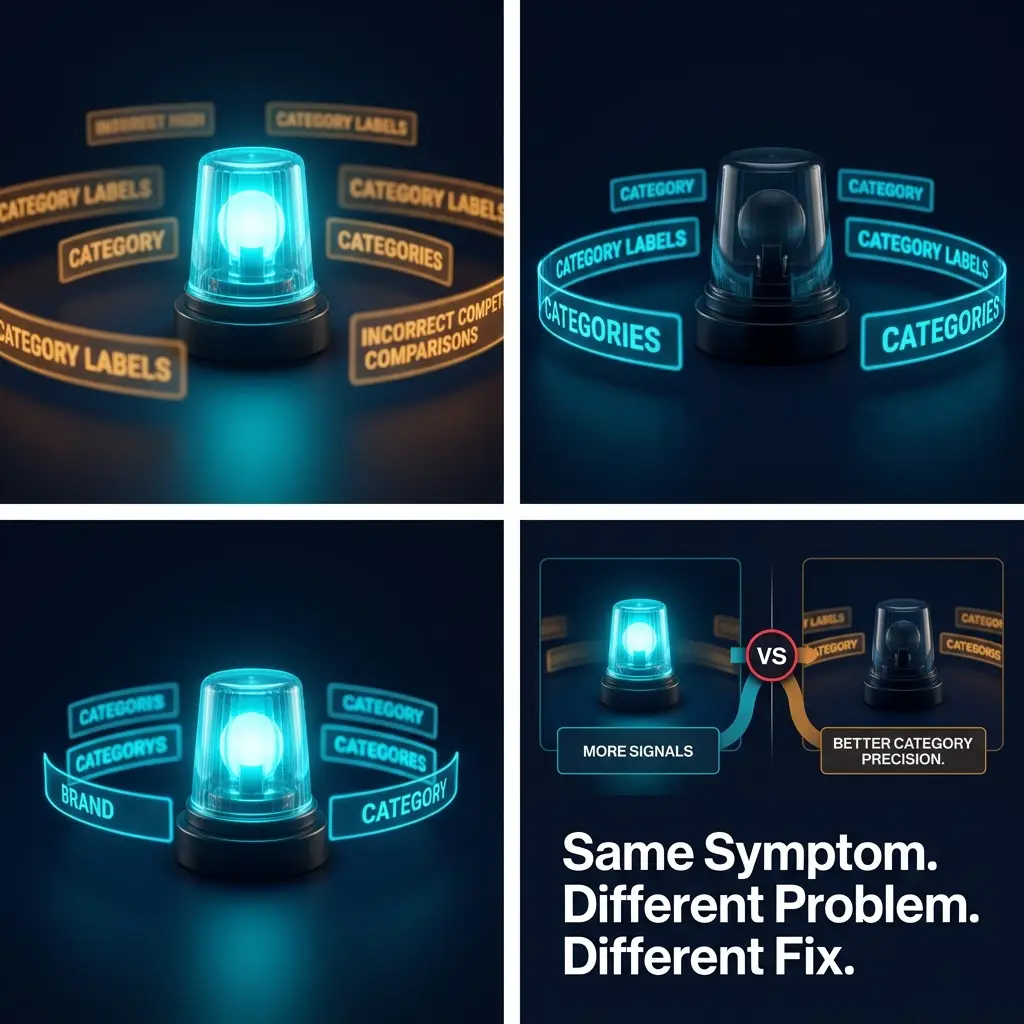
Image 1 placeholder: High persistence, low category discovery
A brand beacon glows steadily in electric cyan, showing strong retrieval frequency. Around it, blurred incorrect category labels and wrong competitor comparisons appear in amber, signaling that AI sees the brand but classifies it poorly.
Image 2 placeholder: Low persistence, correct category understanding
A dim brand beacon appears with fewer retrieval signals, but the category labels around it are precise and clear in electric cyan. This shows that AI understands the brand correctly when it appears, but does not retrieve it often enough.
Image 3 placeholder: Side-by-side diagnostic comparison
A professional diagnostic interface compares both problem types side by side. One path is labeled MORE SIGNALS and the other BETTER CATEGORY PRECISION. The overlay text reads: Same Symptom. Different Problem. Different Fix.
What marketing teams should do next
If your team is investing in AI visibility, do not stop at asking whether AI recommends you.
Ask better questions:
- Are we missing because AI does not retrieve us enough?
- Or are we missing because AI retrieves us but misclassifies us?
- Do our category signals align across all public surfaces?
- Are we being compared against the right competitors?
- Are our differentiators strong enough to survive AI summarization?
- Are we solving a signal problem or a category problem?
Those questions lead to better decisions.
Conclusion
There is not one AI visibility problem. There are at least two major ones.
A brand can fail because it has low persistence. In that case, AI does not retrieve it often enough, and the answer is stronger signal development.
A brand can also fail because it has low category discovery. In that case, AI retrieves it but places it in the wrong category or against the wrong competitors, and the answer is better category precision.
The symptom may be the same: poor recommendation performance.
But the root cause and the fix are completely different.
That is why this distinction matters now, and why it will matter even more over the next 12 to 24 months.
Axis Suite helps brands diagnose which problem they actually have so they can focus on the right correction path: more signal strength or better category precision.
In AI discovery, that difference changes everything.