Wednesday’s hypothetical continues here. A scheduling software company, a buyer, and an answer from ChatGPT, Claude, Gemini, or Perplexity that describes the company accurately and includes a link. The buyer’s next question is whether the software works for a team across several locations, and how to begin. The linked page answers neither. Nothing about this scenario is real, and it is not a finding. It is a way to show what to do once a page check comes back with a gap.
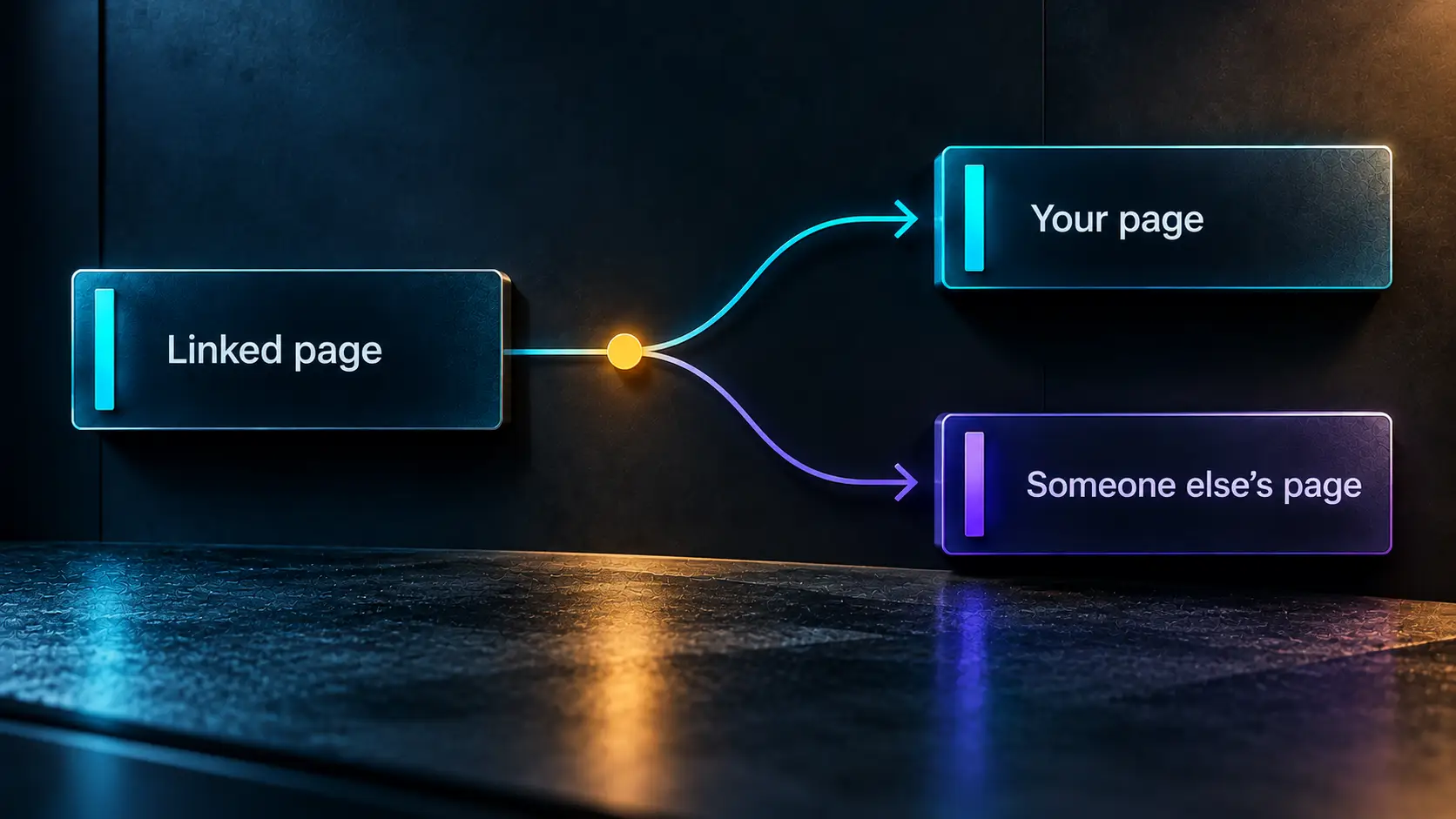
Start with one question before anything else: whose page is it? The answer sorts the situation into two cases, and they call for different work.
In the first case, the linked page belongs to the company. The company controls the content, so the gap is something it could examine. The useful questions are specific. Is the multi-location information missing from the site entirely, or is it present on another page the buyer would not find from this one? Is it current, or does it describe an older version of the product? Does the page make the next step clear, such as where to request a demo or who handles which kind of inquiry? Each answer points toward a different kind of work. Missing information calls for adding it, information on the wrong page calls for making it easier to reach, and out-of-date information calls for updating it.
In the second case, the linked page belongs to someone else. It might be a directory entry, a customer’s review, a news article or an analyst note. The company usually cannot edit it, and the work is different. The first step is reading what the page says. Is the description accurate? Is it current, or does it describe an earlier stage of the business? Does it match how the company describes itself, or does it use a different category? Where the company has claimed or controls a profile on a directory or listing site, updating that profile is within reach. Where it does not, the useful output is an observation: this independent source describes the company this way, and a buyer who follows the link will read it.
Both cases are reminders that a company’s own claim and independent corroboration are different kinds of support. A gap on the company’s own page is a gap in what the company says about itself. A gap on an independent page is a gap in how someone else describes the company. The second can be harder to address, and it can also be more informative, because it shows what the market’s sources say when the company is not the one writing.
Then there is a discipline about what not to conclude. A finding about a page is not a finding about the engine. What happens inside ChatGPT, Claude, Gemini, or Perplexity when an answer links somewhere is not observable from outside the provider. One link on one engine on one date is a single observation, and a different engine, a different question or a different day could produce a different link. The finding supports a narrow statement: for this question, on this engine, on this date, the linked page did not answer the buyer’s next question.
Any change is an intervention, and interventions should be written down before they are made. A team might decide to add a section on multi-location support to a page it controls. Before it does, it helps to say what observation would show an effect, such as the linked page, or a page like it, now answering the buyer’s next question when the same questions are put to the same engines. Then repeat the same set later, with the same wording. Changed wording or new questions are a different test, not a repeat, and a before-and-after difference alone does not establish that the change caused it. Other things move at the same time.
It also pays to be clear about what a better page does not show. A page that answers the buyer’s next question has not been shown to make an engine recommend the company, and recommendation is an outcome the AI produces, while choice is an outcome the buyer produces later. A page check sits well short of either one.
Sometimes the evidence does not justify a change yet. The gap may be small, the information may exist elsewhere on the site, or the team may not know yet whether the result holds. In our framework, WATCH is a legitimate result in that case. It means continuing to observe, setting a date to check again, and writing down what would change the decision. A team that can state that clearly is in a better position than one that rebuilt a page on the strength of a single answer.
The takeaway is simple. A correct link is a starting point. Whose page it is tells you what you can check, what you can change, and what you can only observe.
FAQ
What should I establish first when an AI answer links to a page that falls short?
Establish whose page it is. If it is your own page, you control the content and can examine the gap. If it belongs to someone else, you can check what it says and whether it is accurate and current.
Can I change a third-party page that an AI answer links to?
Usually not. Where you control a profile or listing, such as a claimed directory entry, you may be able to update it. Otherwise the useful output is an observation about how the company is described there.
If I update my page, will ChatGPT, Claude, Gemini, or Perplexity change its answer?
That cannot be assumed. State beforehand what observation would show an effect, then repeat the same questions on the same engines later. A before-and-after difference alone does not establish that the change caused it.
Does a page that falls short explain why the engine linked to it?
No. A finding about a page is not a finding about the engine’s internal process, which is not observable from outside the provider. It is one observation on one engine on one date.
When is waiting the right decision?
When the evidence does not yet justify a change. In Axis Suite’s framework, WATCH is a legitimate result: keep observing, set a date to check again, and write down what would change the decision.
Is this article reporting a result from Axis Suite?
No. The scheduling company and the answer are hypothetical, and the article describes a method without reporting a result for any brand.
About Axis Suite
Axis Suite is the independent intelligence layer that tracks what AI says about your brand and the observable evidence behind it, retrieval, narrative, recommendation, and corroboration signals, across engines including ChatGPT, Claude, Gemini, and Perplexity. Built by TrendAxis, Axis Suite works from a framework that separates Mentioned, Cited, Recommended, and Chosen. Axis Suite is measurement infrastructure, not a marketing quick fix. Explore the Proof Center.