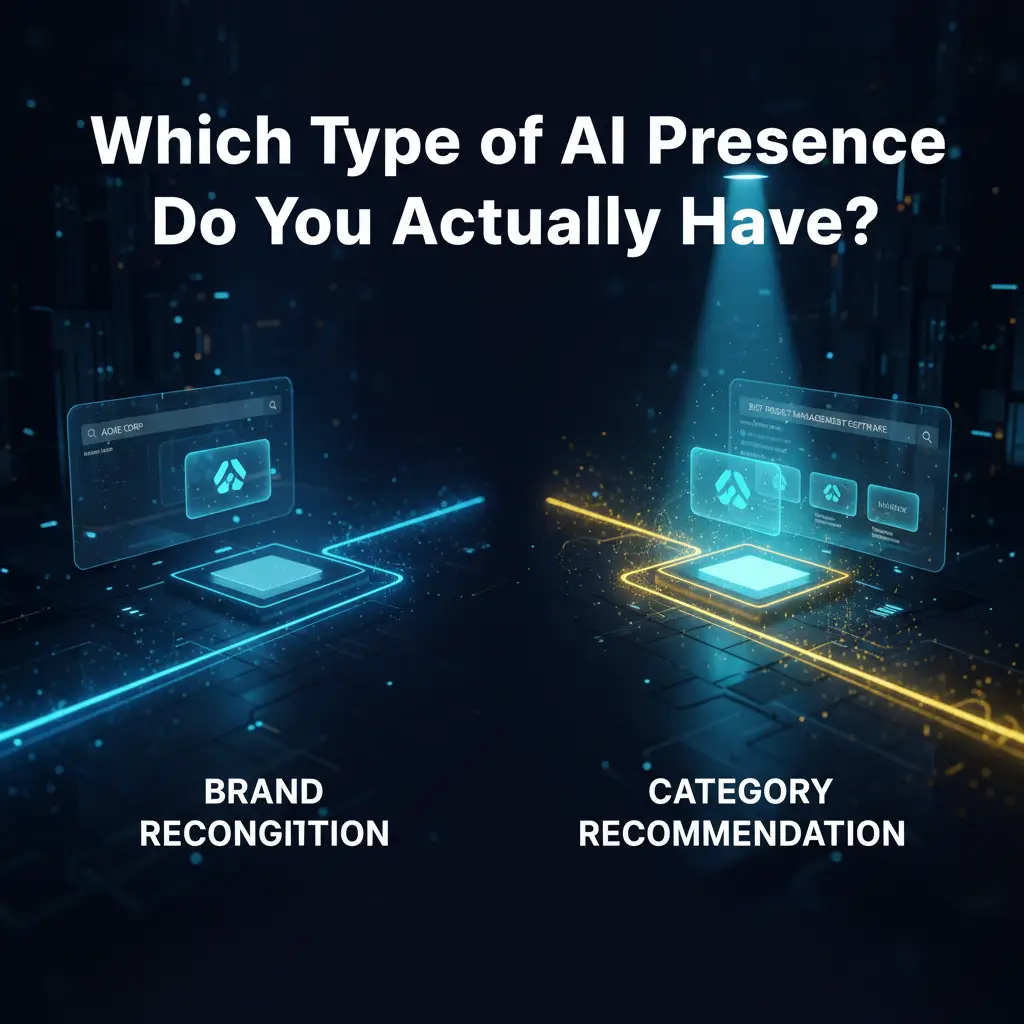
When it comes to artificial intelligence (AI), getting your brand recognized is important. But having your brand recommended? That’s a whole different level. If you want to grow your business and capitalize on the power of AI systems, aiming for category recommendation should be your goal—not just brand recognition.
Here’s why the distinction matters and how you can bridge the gap to make AI work for, not against, your brand.
What’s the Difference Between Recognition and Recommendation?
At its core, AI operates on two distinct modes when interacting with your brand:
Brand Recognition
Brand recognition happens when AI knows and understands your brand enough to identify it. For instance, if someone asks, “What is [Your Brand’s Name]?” AI can retrieve your website, location, or a description of what your brand does. This visibility, while necessary, is passive. People have to search for you or explicitly mention you to surface in their queries.
Category Recommendation
Category recommendation is where the magic happens. This is when AI doesn’t just know your brand exists, but actively promotes it in response to broader, competitive questions. For example, if a user asks, “What’s the best [service/product] in [local area]?” or “Who should I hire for [specific need]?”, AI lists your brand as a top option without any prompting.
It’s the difference between you being there versus you leading the pack. Recommendation drives inbound opportunities, trust, and revenue. Recognition alone might keep you visible, but it won’t make you the standout choice.
Why Does AI Recommendation Matter?
When AI recommends your brand, it elevates you beyond your competitors. It places you in the elite class of businesses that AI identifies as the answer to key consumer questions. Here’s how recommendation creates a bigger impact than recognition:
- Proactive Visibility: AI suggestions take your brand directly to users without waiting for them to search for you specifically.
- Authority Building: Recommendations imply trustworthiness and credibility. If AI suggests your brand, it signals to customers that you’re a reliable choice.
- Customer Conversion: Say your brand is recommended in the top three choices for a service. Being in that shortlist gives you a higher chance of converting viewers into paying customers.
The bottom line? Only one type of AI recognition drives inbound traffic, and that’s the recommendation angle.
Bridging the Gap From Recognition to Recommendation
If your brand hasn’t made its way into AI recommendations yet, don’t worry. A gap doesn’t mean failure; it’s an opportunity to act strategically and get there. Here’s how you can close that gap:
1. Ask AI The Right Questions
Start by running this simple self-test. Ask AI:
“Who are the best options for [your category]?”
If your brand doesn’t pop up, it’s time to dig deeper. Don’t treat this as a visibility failure; understand it as a category recommendation gap. You need to shift your focus from being known to being the go-to choice.
2. Evaluate Your Competitors
Look at who AI is recommending in your place. What attributes do these competitors have in common? They may have consistent branding, strong ratings, or well-aligned content in their respective categories.
3. Build a Recommendation Profile
AI systems select brands based on qualitative and quantitative signals. To move from being recognized to being recommended, your brand has to:
- Deliver Consistent Data: AI thrives on reliability. Ensure your NAP (name, address, phone number), services, and descriptions are aligned across all platforms.
- Align With User Intent: Study what consumers in your category are searching for and tailor your messaging to match those queries.
For example, if people are asking for “eco-friendly home cleaning services,” include that exact phrasing in your service descriptions, blog posts, and headings.
4. Focus on Authority Signals
AI relies on trust signals to feel confident about recommending a brand. You can build these trust signals in several ways:
- Customer Reviews: Encourage detailed reviews with specifics about the problem solved. A glowing review about timely service and great pricing speaks volumes.
- Domain Expertise: Publish FAQs, guides, and thought leadership content to position yourself as an industry expert.
- Social Proof: Show evidence of your popularity and success with awards, community involvement, or high-profile collaborations.
For instance, a local café that’s recognized as “best latte in town” by a popular food blog builds credibility with both AI systems and potential customers.
5. Optimize Competitive Keywords
AI connects preferences, patterns, and keywords to generate recommendations. If your business lacks the right keyword signals, it’s harder for AI to align you with specific queries.
Actionable steps:
- Use keyword tools to identify popular searches in your space.
- Incorporate those keywords naturally into your website copy, blog posts, and profiles.
- Highlight pain points that customers are actively trying to solve.
For example, a travel agency wanting to be recommended for honeymoon destinations might include terms like “romantic travel packages,” “honeymoon deals,” or “best couple getaways.”
6. Track Progress and Adapt
Finally, this is not a one-and-done process. AI evolves, and so should your strategy. Regularly assess:
- How your brand ranks in AI-driven search results.
- Your competitors’ activities and signals.
- Emerging trends in your industry.
Staying ahead of the curve ensures that you maintain (or climb) your place in AI recommendation algorithms.
Real-World Example of Recommendation Power
Here’s a practical illustration. Imagine two home appliance repair businesses in the same city:
- Business A: Maintains accurate online listings and moderate customer reviews. If asked, AI can describe them as a service provider.
- Business B: Takes it further by encouraging insightful customer reviews like, “They fixed my fridge in under an hour at 6 PM on a weekend!” They also write how-to blogs on quick appliance fixes and post testimonials showing why they’re the most reliable in town.
When AI is asked, “Who’s the best appliance repair service near me?”, Business B becomes the top choice. Their proactive approach closes the recommendation gap and secures them a leading spot.
Final Thoughts
AI is no longer just a customer service tool; it’s a decision-making authority that drives business success. Brand recognition is a start, but category recommendation is where you need to be. It’s not enough for AI to know who you are. You need it to vouch for you in competitive spaces.
By focusing on consistency, authority building, and aligning with your customers’ needs, you can leap from being passively known to actively chosen. The question isn’t whether you’re visible; it’s whether you’re the answer.
Are you ready to bridge the gap and become a top recommendation? Start building your competitive edge today.