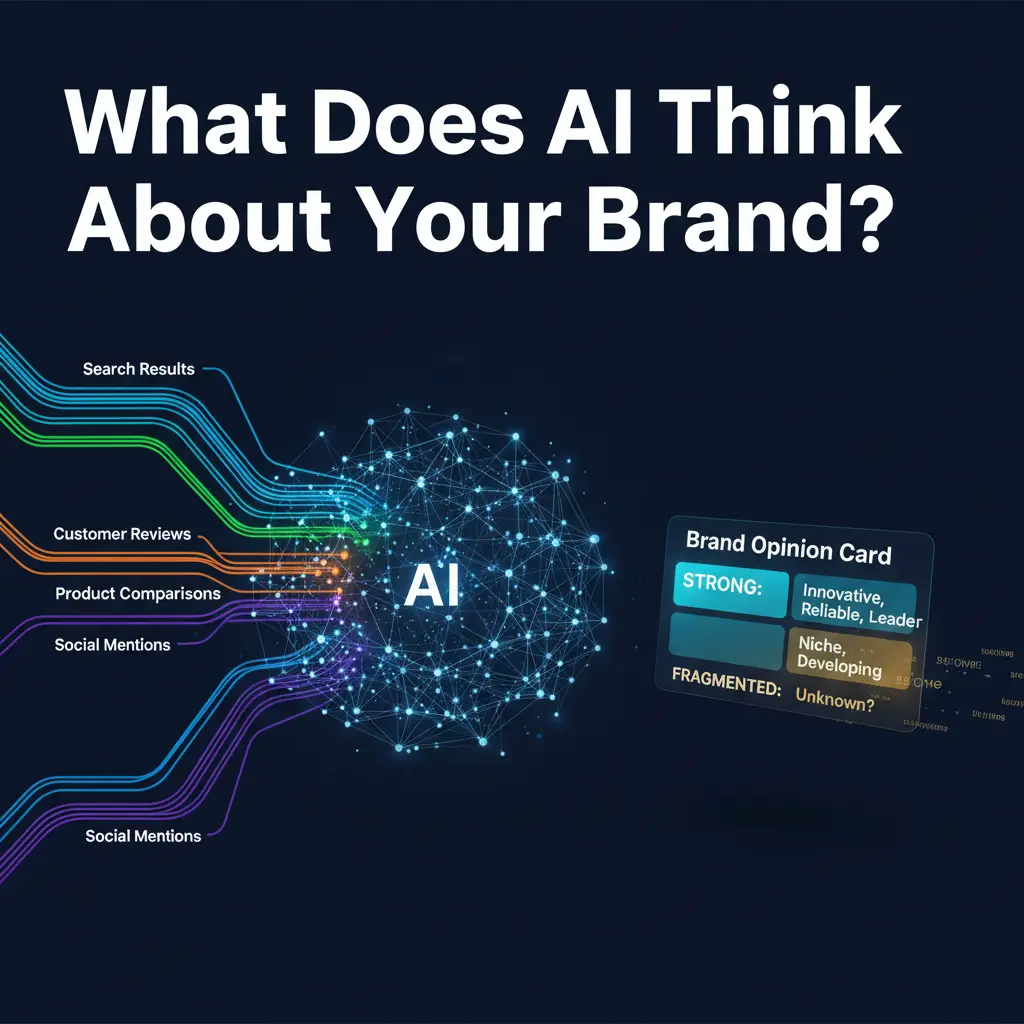
AI doesn’t just find your business online; it forms an opinion that influences search rankings, recommendations, and customer decisions. These opinions, built from data like search results, reviews, comparisons, and brand mentions, can either boost your brand or leave it behind. What’s important to understand is that these opinions are persistent, spreading across prompts, sessions, and platforms.
How consistent are the signals you’re sending to AI? And more importantly, how can businesses manage and improve these AI-driven perceptions using the Axis Suite framework?
This blog dives deep into how AI forms opinions, why it matters, and how you can take control.
Why Are AI Opinions Important?
When AI forms an opinion about your brand, it impacts how you’re represented in search results and recommendations. Strong, confident opinions help AI recommend your brand with authority. On the other hand, inconsistent or fragmented signals lead to hesitation, which can make AI skeptical of your credibility and leave you off valuable recommendation lists.
Think of it like a networked story where every mention, review, and data point contributes to the broader narrative. AI uses this story to decide two things:
- What does your business stand for?
- Can it confidently recommend your brand as a trusted choice?
If the narrative is cohesive, AI will have a clear picture of your value. If it’s inconsistent, AI doesn’t know what to think, and this hesitation will hurt your visibility and relevance.
How AI Forms an Opinion (The Data Streams)
AI doesn’t work in a vacuum. Instead, it aggregates data from various sources across the internet to form its opinion about your brand. Here are the key data streams contributing to that opinion:
1. Search Results
The information AI pulls from search results is foundational. Pages optimized with clear and accurate answers are easier for AI to process. Your brand should be closely associated with its primary services, keywords, and value propositions consistently across all top-ranking pages.
2. Customer Reviews
One of AI’s largest trust signals is customer sentiment. Positive, detailed reviews bolster trust, while negative or sparse reviews create ambiguity. AI scans not just the score but the content of reviews, looking for repeated themes like excellent service or unresolved complaints.
3. Comparisons
When your brand is mentioned in comparisons, AI analyzes where you stand relative to competitors. Being described as “better,” “faster,” or “trusted” enhances your profile. However, mentions like “more expensive” or “inconsistent” can hurt it.
4. Mentions Across Platforms
Every time your brand is mentioned on social media, forums, or blogs, AI logs that data. Context matters here. Are you mentioned as a go-to expert or as an afterthought? These recurring impressions feed directly into the broader opinion AI forms.
The Consistency Factor
When the signals across these data streams align (e.g., reviews back up claims on your site, and mentions match your marketing messages), AI becomes confident in how it perceives and positions your brand. However, inconsistencies weaken AI’s confidence, causing “drifting” opinions that fail to secure top recommendations.
Introducing the Axis Suite Framework
To take control of your AI-driven brand perception, you need a structure to monitor, analyze, and optimize your data. That’s where the Axis Suite comes in. This three-part framework helps you assess your standing and develop strategies for improvement.
A – Audit Your Signals
Before you can manage your AI reputation, you must understand the signals you’re currently sending. Perform a comprehensive audit:
- Search Results: Are your top organic results consistent with your current branding and messaging? Are your landing pages aligned with what users are searching for?
- Reviews: Are your customer reviews consistent in tone and sentiment? Are they detailed with specifics that add credibility, or are they generic?
- Mentions: How are you being talked about across social channels, blogs, and forums? Positive mentions should align with your branding strategy.
Actionable Tip:
Run a query in AI tools like ChatGPT. Ask, “What is [Your Brand’s Name]?” and “Who are the top brands for [your category]?” The answers will give you insight into how AI currently views your brand.
X – Examine Competitors
AI inherently works by comparing options. Examining your competitors’ online presence helps you understand what they’re doing better (or worse) and how to position yourself strategically.
What to Look For:
- Do competitor reviews highlight consistently strong qualities (e.g., fast service, reliability)?
- Are their keywords showing up more frequently in AI responses?
- Are they driving more mentions or press online that build their credibility over yours?
Actionable Tip:
Check competitor keyword rankings and online buzz. Use SEO tools to uncover areas where they’re being noticed more than you.
I – Improve Your Data Streams
Once you’ve audited your signals and compared competitors, it’s time to enhance how AI perceives you. Focus on creating consistent, high-quality content across all touchpoints.
Steps to Take:
- Reviews: Actively request detailed customer reviews. Specifics like time saved, cost-effectiveness, or exemplary support turn vague praise into AI gold.
- Mentions: Collaborate with journalists, influencers, or industry partners to generate positive chatter about your brand.
- Website Content: Update your site with user-first, SEO-optimized language. Include FAQs or insights that address pain points in your industry.
Actionable Example:
A local fitness brand, “PowerMove Gym,” was being recorded by AI as “good for weightlifters” but not “versatile” enough for casual workouts. By requesting app-related reviews highlighting non-weightlifting options like yoga classes and family-friendly packages, PowerMove flipped the narrative. AI started to recommend them for broader fitness needs.
S – Sustain the Momentum
AI algorithms evolve constantly. To ensure you remain a trusted recommendation, you need continuous tracking and optimization.
Regular Tasks:
- Monitor rankings and keywords for shifts.
- Respond to negative reviews diplomatically to mitigate their impact.
- Run periodic audits to spot if your signals are drifting from your core brand values.
Actionable Tip:
Set up tools for automated alerts when your brand is mentioned online or when competitors launch new campaigns. Staying proactive ensures you don’t fall behind over time.
Case in Point: The Importance of Consistent Narratives
Consider the example of two competing dental clinics in Chicago:
- BrightSmile Care had accurate information on their website, but reviews were inconsistent. Some thrilled customers praised convenience, while others cited long wait times.
- Healthy Grins Dental had robust mentions highlighting trust, rapid service, and professional staff. Reviews mirrored these narratives, and the clinic strategically positioned themselves in local health blogs.
The result? When prospective customers asked AI for “the best dental clinic in Chicago,” Healthy Grins dominated, while BrightSmile struggled due to inconsistent signals.
Final Thoughts
AI isn’t judging your brand based on sentiment alone; it’s forming repeatable, lasting opinions based on the data streams it collects. By auditing signals, understanding competitors, and enhancing your narrative using the Axis Suite Framework, you can create a stronger, more confident AI-driven perception.
The question to ask yourself isn’t, “Can AI find my business?” Instead, it’s, “What does AI think about my business?” That opinion matters more than you think. Take control of it today.